

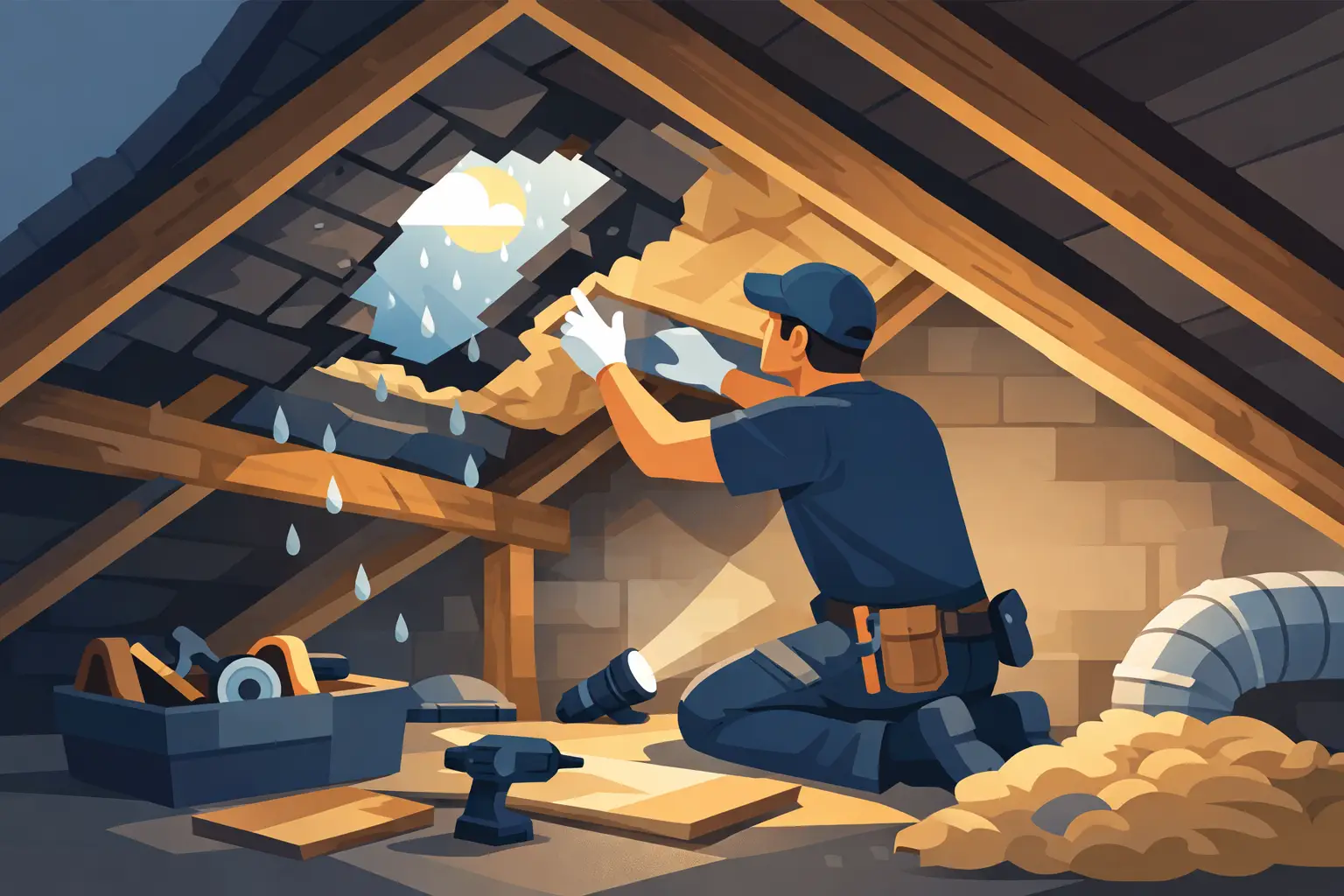
A brown stain on the ceiling usually starts the same conversation: can a roof be repaired from inside, or does someone need to get up on the roof straight away? The honest answer is that an internal repair is sometimes possible as a short-term measure, but it is rarely the proper fix.
That matters because a leak seen indoors is not always directly above the damp patch. Water can travel along felt, timbers and insulation before it shows itself. So while an inside repair may slow the problem down, it often does not deal with the actual point of failure on the roof covering.
Can a roof be repaired from inside in any real sense?
Yes, in limited cases. If the aim is to contain water, protect the loft space or buy time until safe external access is possible, work from inside can help. If the aim is a lasting roof repair, the answer is usually no.
A roof is an outside structure. Tiles, slates, flashings, ridges, valleys and flat roofing membranes all keep rain out from the exterior. When one of those parts fails, the fault normally needs to be found and repaired from outside. Trying to solve it only from the loft is a bit like trying to fix a cracked window by repainting the wall beneath it.
That does not mean internal work is pointless. It just means it needs to be seen for what it is – damage limitation rather than a full repair in most cases.
When an inside roof repair can help
There are situations where working from inside is sensible. During bad weather, for example, it may be unsafe to access the roof immediately. Heavy rain, high winds or icy conditions can make external work risky. In those cases, a roofer may advise a temporary internal measure until conditions improve.
This can include catching and diverting drips, applying a temporary patch to the underside in a loft space, or protecting insulation and timbers from further soaking. On some felted pitched roofs, small splits or nail holes visible from inside may be temporarily sealed to reduce incoming water.
With certain flat roofs, it may also be possible to identify where water is entering around the deck and take short-term action below. But again, this does not remove the failed section of covering above. It only reduces the effects indoors.
Internal work can also help if the issue is partly condensation rather than a roof leak. Damp in a loft is not always down to missing tiles or damaged felt. Poor ventilation, trapped moisture and cold surfaces can create water droplets that mimic a leak. In that case, the right fix may involve improving airflow or insulation rather than replacing external roofing materials.
When it will not work
If tiles are cracked, slipped or missing, the real fix is outside. The same applies to damaged leadwork, faulty flashing around a chimney, worn ridge mortar, failed valleys, punctured flat roofing membranes and defective verge details.
No amount of patching from the loft will put a tile back in place or stop wind-driven rain getting under broken roof coverings. Even if the drip stops for a while, water can still be working into the structure where you cannot see it.
This is where homeowners can get caught out. A leak appears smaller after an inside patch, so it feels sorted. Weeks later, the felt is still wet, battens are softening, and insulation has been holding moisture the whole time. By then, what might have been a straightforward repair can turn into a larger job.
Why leaks are often deceptive
Roof leaks are rarely neat and obvious. Water follows the easiest route, and that route changes with wind direction, roof pitch and how saturated the materials already are.
A split in felt near the eaves might show up as a damp patch several feet away. A chimney flashing issue can send water down timbers before it appears in a bedroom ceiling. On older roofs, more than one defect may be present at the same time.
That is why a proper inspection matters. Looking from inside is useful, but it only shows part of the story. A good roofer will usually want to inspect both the loft and the outside surface to work out whether the problem is a failed covering, flashing detail, blocked guttering, poor ventilation or something else entirely.
Temporary repair versus proper repair
This is the key distinction. A temporary internal repair aims to reduce immediate damage. A proper roof repair aims to remove the cause.
Temporary work might be the right call if rain is pouring in and external access has to wait until conditions are safe. It can also be useful as a short holding measure while scaffolding or materials are arranged. There is nothing wrong with that, as long as everyone is clear it is temporary.
A proper repair means dealing with the defective part of the roof itself. That may involve replacing slipped or broken tiles, renewing felt, repairing flashing, resealing a flat roof detail or rebuilding a failed section of mortar work. That is the work that gives you a durable result.
Can you repair a roof from inside yourself?
Homeowners can take sensible steps indoors to limit damage. Moving belongings, placing containers under drips, and protecting ceilings and loft insulation are all worth doing. If it is safe to enter the loft, you may be able to see obvious water ingress and take photos for reference.
What you should not do is assume an indoor patch is enough, or start pushing insulation aside and applying products to timbers without understanding where the water is really coming from. Loft spaces can be awkward and unsafe, and leaks around electrics need extra caution.
DIY sealants are especially hit and miss. Some make later repair work harder because they trap moisture or stick to surfaces that need to be replaced properly. If you are using anything inside, think of it as an emergency measure only, not a solution.
Signs the roof needs external attention now
Some leaks can wait a day or two for safe access. Some cannot. If water is actively coming through light fittings, if the ceiling is bulging, or if large sections of insulation and timber are getting soaked, the problem needs urgent assessment.
The same goes for visible storm damage, fallen ridge tiles, missing slates, or flashing that has lifted. In those situations, asking whether a roof can be repaired from inside misses the bigger issue. The roof covering has likely failed and needs outside repair as soon as it can be done safely.
In areas like Castleford and across West Yorkshire, strong winds and driving rain can turn a small defect into a much bigger one in a short space of time. Fast action matters, but so does doing the right repair rather than the quickest-looking one.
What a roofer will usually do first
A proper roofer does not guess. They will normally start by identifying the entry point, checking the condition of the surrounding area, and assessing whether any internal damage suggests a longer-running issue.
If immediate external work is unsafe, they may recommend a temporary internal or protective measure first. After that, the roof itself can be repaired when access is safe and practical. That approach protects the property without pretending the inside patch is the finished job.
At 5 Towns Roofing, that is the sort of straightforward advice homeowners tend to need most – what can be done now, what needs doing properly, and what the likely cost and timescale look like without any messing about.
The honest answer homeowners need
So, can a roof be repaired from inside? Sometimes, but usually only in a limited and temporary way. If the defect is in the external roofing materials, the lasting repair almost always has to be carried out from outside.
The best approach is to treat any indoor action as a short-term measure to reduce damage while the real cause is identified and repaired properly. That saves time, avoids false economy, and gives you a much better chance of keeping damp, rot and repeat leaks out of the house.
If you have noticed a ceiling stain, a fresh drip in the loft or signs of water after bad weather, it is worth getting it checked before a manageable repair turns into a bigger and more expensive problem.