

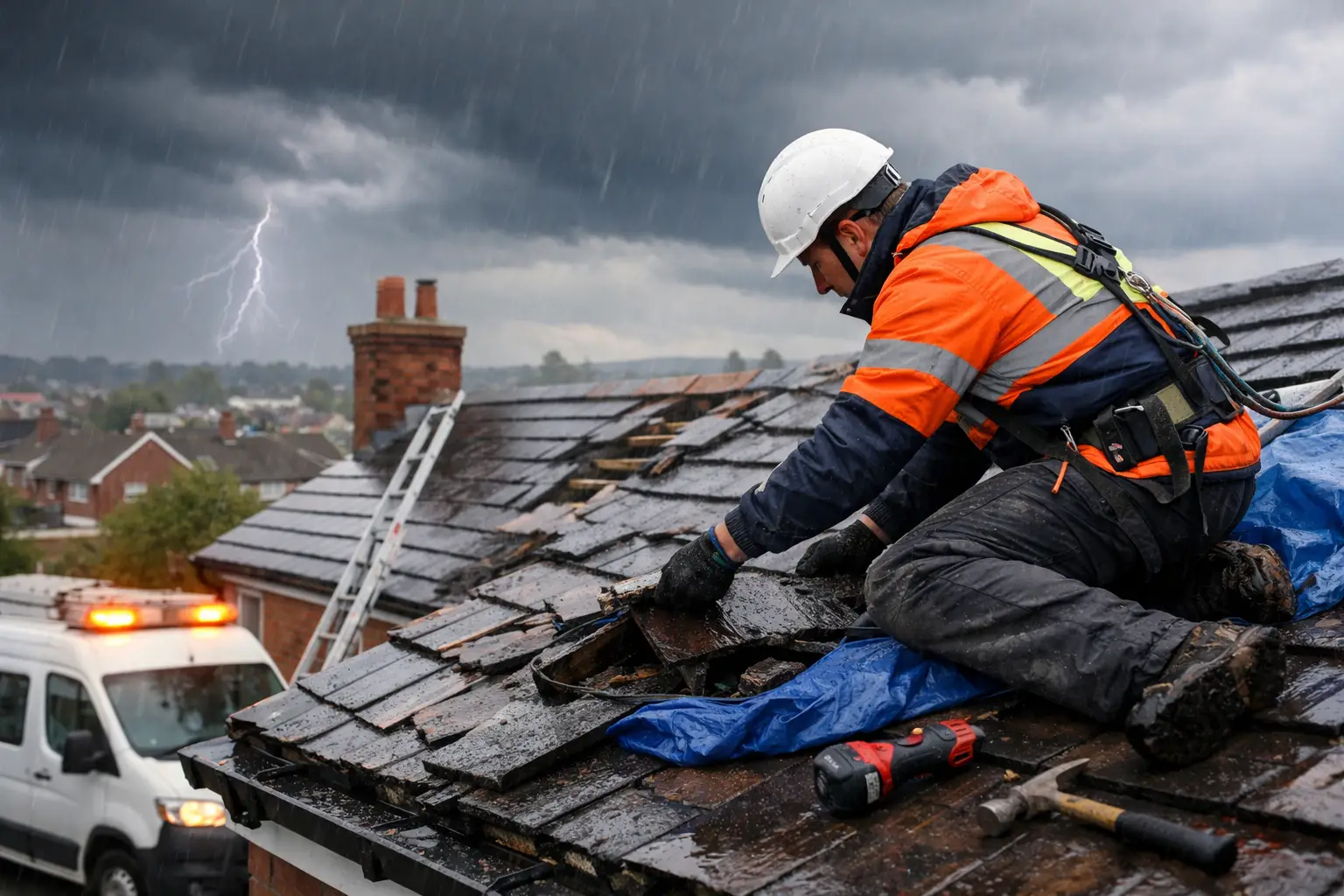
A sudden drip through the ceiling, slates on the drive, or a section of flat roof lifting in high wind can quickly turn into more than a minor repair. If you need an emergency roofer in the Normanton area, the priority is to limit further damage, keep everyone safe and have the roof assessed properly before a small problem reaches the rooms below.
A roof does not have to be completely collapsed to need urgent attention. Water can travel along timbers, insulation and plasterboard before it appears indoors, so the visible damp patch is not always directly beneath the fault. Acting promptly can protect your ceiling, electrics, belongings and the structure of the property.
What Counts as a Roofing Emergency?
Some faults can wait for a booked repair, particularly if the roof is dry and secure. Others should be dealt with as soon as possible, especially when rain or wind is expected. The difference comes down to whether the roof is allowing water in, has become unsafe, or is likely to deteriorate quickly.
An urgent call is usually sensible when you have active water coming through the ceiling, missing or broken tiles and slates after a storm, a torn flat-roof covering, damaged leadwork around a chimney, or a blocked gutter overflowing into the roofline. Fallen branches, loose ridge tiles and visibly sagging sections of roof also need professional attention without delay.
It is worth taking a cautious view with chimney damage. Loose brickwork or failed flashing can admit water, but it can also present a safety risk below. Do not climb onto the roof, lean ladders against loose guttering, or try to secure tiles yourself in poor weather. A temporary fix made from ground level is one thing; working at height in wind and rain is another.
What to Do Before an Emergency Roofer Arrives
The first job is to protect people and limit the spread of water. Move furniture, rugs and electrical items away from the affected area. Put containers beneath drips and use old towels to soak up surface water where it is safe to do so. If water is close to light fittings or sockets, switch off the relevant circuit at the consumer unit if you can do it safely, then seek advice from an electrician as well as a roofer.
If a ceiling is bulging with trapped water, stay out from underneath it. A waterlogged ceiling can fail suddenly. Do not puncture it unless you have been advised by a suitable professional, as there may be electrical cables above and the water can release quickly.
From outside, a quick look from ground level can be useful. Photos of missing slates, displaced flashing, storm debris or an overflowing gutter can help explain the problem when you call. There is no need to diagnose the repair yourself. Clear details such as where the leak is showing, when it started and whether it followed heavy rain or wind will help a local roofer judge the urgency.
Emergency Roofer Normanton Area: The First Visit
A proper emergency roofing visit is about making the property safe and preventing further water ingress. Depending on the weather, access and condition of the roof, that may mean carrying out a permanent repair there and then or installing a secure temporary weatherproof covering until conditions allow the full work to be completed.
A roofer should inspect the affected section and the areas around it, not just replace the first tile that looks out of place. One missing slate may be the obvious issue, but strong wind can loosen neighbouring fixings, crack mortar at the ridge, disturb flashing or expose a weakness in an older underfelt. A careful inspection gives you a clearer picture of what has happened and what needs doing next.
Temporary work is sometimes the right answer, not a shortcut. Heavy rain, icy conditions or high winds can make a full repair unsafe. In those cases, securing the roof and returning when conditions improve is the sensible approach. What matters is that you understand what has been done, what remains to be repaired and what the likely cost involves.
Common Causes of Sudden Roof Leaks
Storms are an obvious cause, but many urgent leaks begin with a smaller fault that has gone unnoticed. A cracked tile may hold out for months until wind-driven rain finds its way underneath. Mortar can deteriorate around ridge tiles and chimneys over time, while lead flashing can split, lift or pull away from the brickwork.
Flat roofs need particular attention after prolonged rain. Water ponding on an ageing felt roof can find its way through weak seams, cracks or failed edges. If the leak is beneath a flat roof, do not assume the entire roof needs replacing. A localised repair may be enough where the covering is otherwise sound. However, repeated leaks, widespread blistering or a roof at the end of its working life can make replacement better value than regular patch repairs.
Blocked gutters are another frequent cause of water damage. When gutters overflow, water can run back against fascias and soffits, soak into brickwork and reach the roof edge. The repair may involve clearing or replacing gutters, but the roofer should also check whether the roofline timbers or felt have been affected.
Choosing a Roofer When You Need Help Quickly
An emergency leaves little time for research, which is why clear communication matters. Look for a local, established roofing contractor that can explain the problem in plain terms, set out what work is urgent and provide a written quotation for any further repair. You should not feel pressured into a complete new roof because of one leak.
At the same time, the cheapest immediate price is not always the best outcome. A loose tile pushed back into place without checking the fixing, underfelt or surrounding roof can leave the original problem unresolved. Good emergency work balances speed with a proper assessment.
Ask whether the repair will be guaranteed and whether any guarantee is insurance-backed. It is also reasonable to ask what materials will be used, whether photographs can be provided for work that cannot be viewed from the ground, and when permanent repairs can take place if temporary protection is needed.
For homeowners in and around Normanton, a contractor with experience across tiled roofs, slate roofs, flat roofing, chimneys and guttering is useful because water ingress is not always caused by the roof covering alone. One visit should identify whether the issue lies with a tile, flashing, valley, gutter, chimney or roofline detail.
After the Leak Has Been Stopped
Once the roof is secure, give the inside of the property time to dry properly. Ventilate the space where possible and keep an eye on ceilings, walls and loft insulation. Damp insulation may need replacing if it has become saturated, as it will not perform properly and can hold moisture against timbers.
Check your home insurance policy before arranging internal decorative repairs. Insurers often want evidence of the damage and may ask for photographs, invoices or a report of the cause. A roofing repair normally prevents further damage, while the policy may address the resulting internal damage depending on your cover and the circumstances.
It is also a good moment to consider preventative maintenance. Annual visual checks, clearing gutters, repairing slipped tiles promptly and keeping an eye on chimney pointing can prevent many call-outs. Older roofs do not always need replacing, but they do benefit from regular attention before a period of bad weather exposes a weak point.
A Local, Straightforward Response Matters
When rain is getting into your home, you need practical advice rather than guesswork. A reliable roofer will tell you whether the job needs an immediate temporary repair, a straightforward localised fix or a more detailed inspection once the weather settles. That honest approach helps you make the right decision for your property and budget.
5 Towns Roofing provides residential roof repairs and emergency support across the local area, with the aim of making homes safe, dry and properly protected again. If you spot a leak, missing roofing materials or storm damage, act early, keep clear of unsafe areas and arrange for the roof to be assessed before the next spell of rain turns a manageable repair into a larger one.