

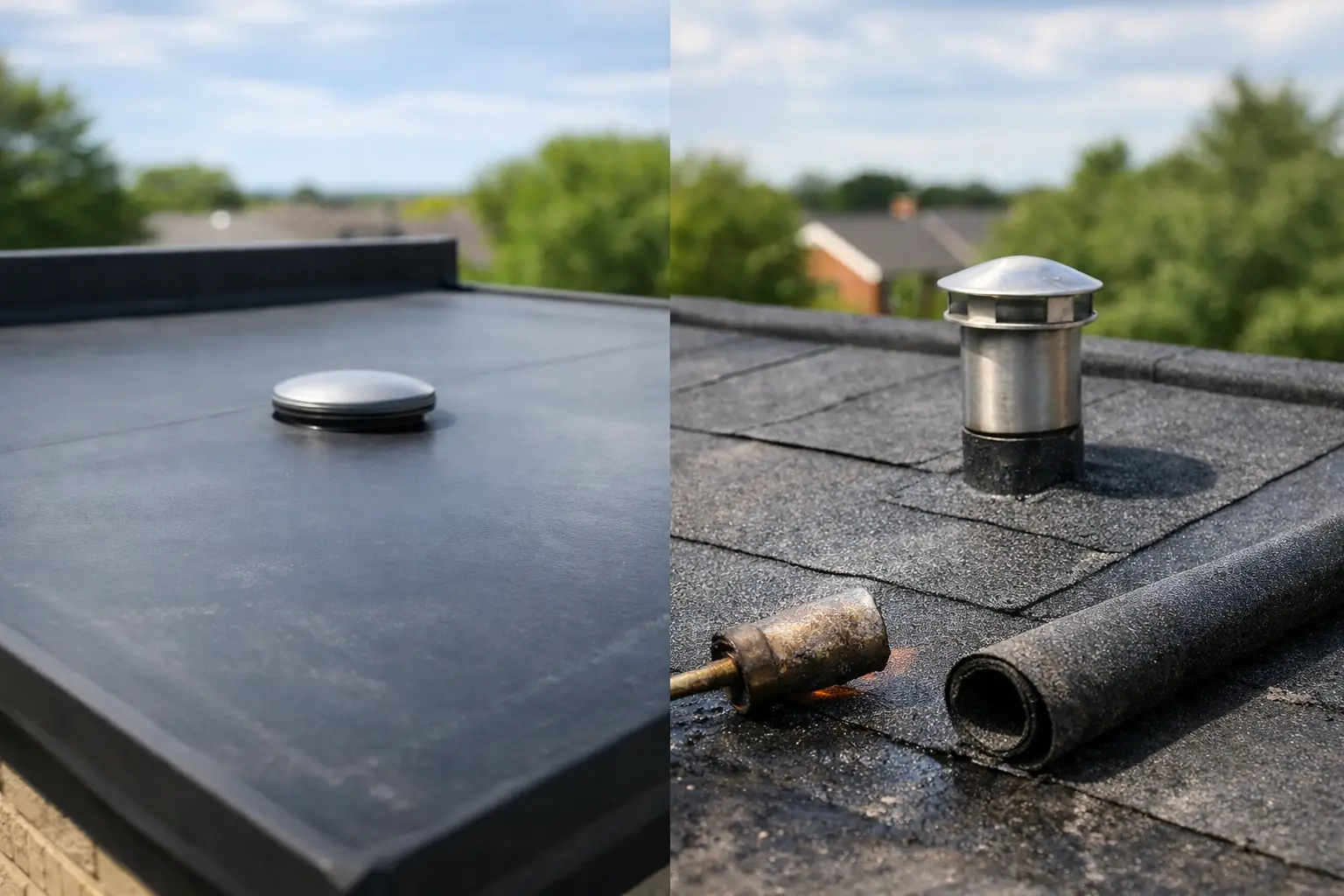
A flat roof usually starts the same way – a small leak, a damp patch on the ceiling, or felt that has started to lift at the edges after bad weather. When homeowners ask about EPDM vs felt roofing, they are usually not looking for theory. They want to know which one will last, which one is worth the money, and which one is right for their home.
The honest answer is that both systems can work well when they are fitted properly. The better choice depends on the age of the property, the size of the roof, your budget, and whether you want the cheapest short-term fix or a longer-lasting solution.
EPDM vs felt roofing at a glance
EPDM is a synthetic rubber membrane used on flat roofs. It is usually fitted in large sheets, which means fewer joints and less chance of water getting in through seams. It has become a popular option for garages, extensions, dormers and bay roofs because it is durable and generally low maintenance.
Felt roofing is the more traditional flat roofing system. Modern felt is not the same as the older type many people remember from years ago. Today’s torch-on felt systems are much tougher than older mineral felt, and when installed properly they can give a solid, reliable finish.
So this is not a case of one being good and the other being poor. It is more a matter of where each one makes sense.
Cost matters, but so does value
For many homeowners, price is the first question. Felt is often cheaper upfront than EPDM, which makes it attractive if you need a flat roof replaced quickly and want to keep costs under control.
That said, the cheapest quote is not always the best value. If a roof needs patching again in a few years, or if the material does not cope well with movement and weathering, that lower starting price can look less appealing over time. EPDM usually costs more initially, but it can offer better long-term value because of its lifespan and resistance to cracking.
This is where a proper inspection matters. A small porch roof is very different from a larger extension roof, and the best option for one may not be the best for the other.
Lifespan and durability
If longevity is your main concern, EPDM generally has the edge. A well-installed EPDM roof can last for decades. It deals well with temperature changes, UV exposure and standing water, all of which are common issues on flat roofs in the UK.
Felt can still perform well, but it tends to have a shorter lifespan overall. Modern high-performance felt is far better than older products, yet it still relies more heavily on layered installation and good jointing. Over time, wear can show around seams, edges and details if the roof has taken a lot of weather.
That does not mean felt fails quickly. A properly fitted felt roof can still give many years of service. It just means EPDM is often chosen by homeowners who want a longer-term answer and would rather avoid repeat work later on.
Weather performance in British conditions
Flat roofs in West Yorkshire take a fair amount of punishment. Rain, frost, strong winds and sudden temperature swings all test the material. This is one reason the EPDM vs felt roofing question comes up so often.
EPDM performs very well in wet and changeable weather. Because it remains flexible, it is less likely to split as the roof expands and contracts. That flexibility is a real benefit on roofs that are exposed or prone to movement.
Felt also stands up well when fitted correctly, especially modern multi-layer torch-on systems. It creates a durable waterproof barrier and can be a very dependable option. The difference is that felt is generally more vulnerable to ageing and surface wear over the years, particularly if installation standards have been poor.
In other words, both can cope with British weather. EPDM tends to keep its performance longer.
Installation and disruption
One thing homeowners often overlook is how the roof is actually fitted. EPDM is usually installed as a single membrane bonded to the roof deck, with trims and edge details added to finish the job. Because there are fewer seams, the process can be cleaner and more straightforward on many roofs.
Felt roofing is built up in layers using heat to bond the material. Done properly, this creates a strong finish, but it is a more involved installation method. It also requires real care and experience around edges, corners and penetrations.
From a homeowner’s point of view, what matters most is not just the material but the standard of workmanship. A badly fitted EPDM roof will still fail. A well-fitted felt roof will still outperform a poor job using supposedly premium materials.
Repairs and maintenance
If your roof is already leaking, repairability may matter just as much as lifespan. Felt roofs can often be repaired in sections, depending on the age and condition of the existing system. That can make them practical where a full replacement is not yet needed.
EPDM can also be repaired, but the approach depends on the type of damage and how widespread it is. Small punctures or local defects are often manageable, but if the roof has underlying issues with the deck or edges, patching alone may only delay a bigger job.
This is why honest advice matters. Some roofs genuinely need a simple repair. Others are at the stage where patching becomes false economy.
Appearance and finish
Looks are not always the top priority on a flat roof, but they still matter, especially on extensions and visible lower roofs. EPDM has a neat, plain appearance with a clean finish. Because it is usually laid in larger sheets, it often looks less busy than felt.
Felt has a more traditional appearance and may suit some properties better, especially where the roof is less visible and practicality is the main concern. Neither option is especially decorative, but both can look tidy when installed well.
The key is good detailing. A flat roof often looks poor not because of the material itself, but because of rough edges, untidy trims or rushed workmanship.
When felt roofing makes sense
Felt can be the right choice if budget is tight, if the roof area is relatively simple, or if you want a proven system that has been used on domestic properties for years. It can also work well on garages, sheds and smaller flat roofs where a cost-effective replacement is needed.
Modern felt is not something to dismiss out of hand. There are plenty of situations where it gives a sound result and represents sensible value.
When EPDM is the better option
EPDM is often the stronger choice when you want a longer-lasting roof, when the area is larger, or when weather resistance is a major concern. It is especially popular on extension roofs where homeowners want a durable system with minimal maintenance.
If you plan to stay in your home for years and want to avoid doing the same job again too soon, EPDM often makes more sense.
So which should you choose?
If you are deciding between EPDM vs felt roofing, the safest answer is this: choose the system that suits the roof, not just the price on the quote.
For a lower upfront cost and a reliable traditional flat roofing system, felt can be a good option. For longer lifespan, better flexibility and strong performance in tough weather, EPDM often comes out ahead.
What you should not do is choose based on material alone. The condition of the timber beneath, the roof design, drainage, edge details and the quality of fitting all matter just as much. A straightforward inspection by an experienced local roofer will usually tell you very quickly which route is likely to serve you better.
At 5 Towns Roofing, we see plenty of flat roofs where the real problem is not whether the material was felt or rubber. It is that the roof was patched too many times, fitted poorly in the first place, or left too long before being dealt with properly.
If your flat roof is showing signs of wear, the best next step is not to guess. Get it checked, understand your options, and choose the fix that gives you confidence when the next spell of bad weather arrives. Your roof should be one less thing to worry about.