

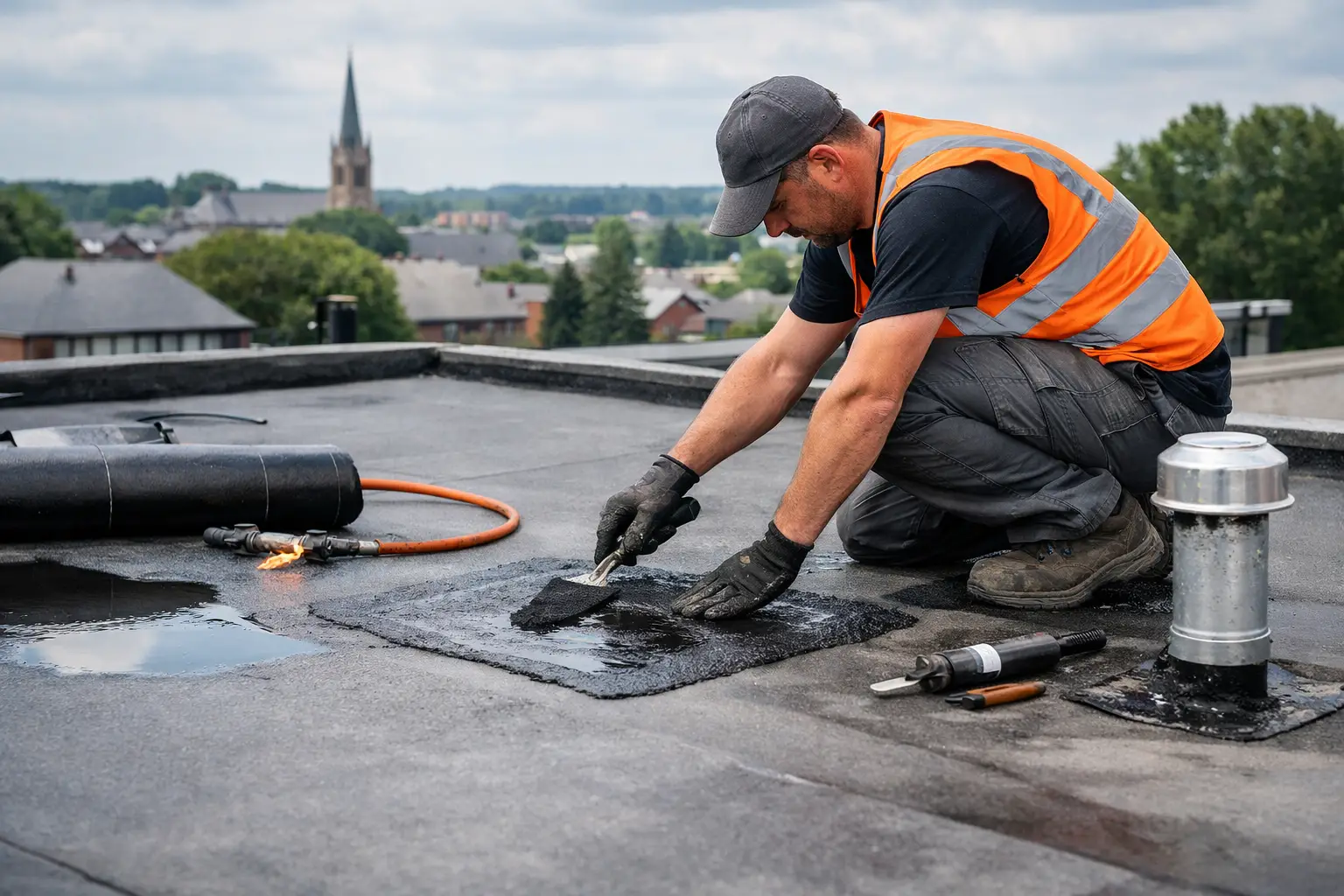
A flat roof rarely fails all at once. More often, it starts with a damp patch on the ceiling, a bit of standing water after rain, or a crack that looks small until the next spell of bad weather. If you are looking for flat roof repair Wakefield homeowners can rely on, the first thing to know is this – acting early nearly always saves money, stress and damage inside the home.
Flat roofs are common on extensions, garages, dormers and porches across West Yorkshire. They do a solid job when installed properly, but they take a fair amount of punishment from rain, frost, wind and summer heat. Over time, even a well-fitted flat roof can start to show wear. The key is knowing when a repair is enough, when a patch-up is only delaying the problem, and when it makes more sense to replace the surface properly.
Flat roof repair Wakefield: the signs to watch for
Most homeowners spot the inside signs before they notice the roof itself. A water stain on plaster, peeling paint near the ceiling line, or a musty smell in an upstairs room can all point to a flat roof issue. Outside, there may be splits in the felt, lifted edges, bubbling, cracked flashing or obvious ponding where water sits for too long.
Not every issue means the roof is beyond saving. A localised split or a joint that has opened up can often be repaired without replacing the whole roof. But if the surface has become brittle across a large area, if water has been getting into the structure for a while, or if the roof has already had several repairs over the years, a more extensive job may be the better option.
Age matters too. Many older felt flat roofs begin to struggle after years of weather exposure. Newer systems tend to last longer, but any material can fail if drainage is poor or earlier workmanship was not up to scratch.
Why flat roofs tend to fail
In this part of Yorkshire, the weather is usually the biggest factor. Repeated wet and dry cycles can open up weak points. Frost can make small cracks worse. Strong winds can lift loose edges and allow water underneath. During warmer weather, expansion and movement can put stress on seams and trims.
That said, weather is not always the full story. Some flat roofs fail early because they were fitted over uneven decking, laid with poor falls, or repaired in a rush with materials that were never meant to last. Blocked gutters and outlets can also shorten the life of a flat roof by leaving water with nowhere to go.
This is why a proper inspection matters. A roof that looks tired from the ground may only need a sensible repair. Another one that appears fine at first glance may have hidden moisture trapped beneath the surface.
Repair or replacement – what makes sense?
This is where honesty matters. Some roofing firms push for a full replacement when a straightforward repair would do. Others keep patching the same roof because it is the cheaper conversation in the moment. Neither approach helps the customer if it is the wrong one.
If the problem is isolated, the decking underneath is still sound and the rest of the roof is in decent condition, repair is often the right call. That might mean sealing a split, replacing damaged sections, sorting the flashing or addressing a weak joint around an edge or outlet.
If the roof has widespread deterioration, soft spots underfoot, persistent leaks in different areas or repeated standing water caused by poor structure, replacing the covering is usually the more cost-effective choice in the long run. Paying for several short-term repairs on a failing roof can end up costing more than doing the job properly once.
It depends on the roof’s age, the material, the size of the damaged area and how long water has been getting in. A good roofer should talk you through that clearly, without dressing it up.
Common flat roof repair options
The right repair depends on the roof type and the condition of the existing surface. Felt roofs can often be patched or overlaid in specific areas if the surrounding material is still sound. Modern flat roofing systems may allow for more targeted repairs at seams or penetrations.
Flashing repairs are another common fix. Where a flat roof meets a wall, chimney or raised edge, the detail work is often where leaks start. If those junctions fail, water can track behind the surface and show up inside some distance away from the actual point of entry.
Drainage improvements also matter. If the leak is linked to ponding water rather than a single split, the repair may need to address the underlying fall of the roof or the outlet arrangement, not just the visible damage. A patch over the symptom alone will not last.
For garages and extensions, it is also worth checking the fascia, soffits and guttering around the flat roof area. Water overflowing from blocked or damaged gutters can mimic a roof leak and send rainwater where it should not be going.
What affects the cost of flat roof repair?
Homeowners usually want a ballpark figure straight away, which is fair enough, but flat roof repair costs can vary quite a bit. A small repair to a single damaged section is very different from sorting long-term water ingress across a larger extension roof.
The main factors are the size of the roof, how easy it is to access, the type of material already in place, whether the timber beneath has been affected, and whether the issue is truly local or part of a wider failure. A simple patch or flashing repair is one thing. Replacing rotten decking and reworking drainage is another.
Scaffolding is not always needed, but where safe access is difficult, it can affect the price. Even so, cutting corners on access is never worth it. Good workmanship starts with doing the job safely and being able to inspect the roof properly.
The cheapest quote is not always the best value either. If a repair is done with poor materials or rushed detailing, you may be paying again after the next heavy rain.
Why quick fixes often fail
A lot of flat roof problems get worse because someone has tried a temporary fix first. Roofing paint, bitumen slapped over a wet surface, or a repair done without finding the real source of the leak can all buy a bit of time, but rarely much more.
Water has a habit of travelling. The drip you see indoors is not always directly below the fault. That is why leak tracing takes experience. If the repair only deals with where the water appears rather than where it enters, the problem stays in place.
There is also the issue of trapped moisture. Sealing over damp materials can leave the roof structure holding water beneath the surface, which then causes blistering, decay or further failure later on. A proper repair is about more than covering a hole.
Choosing the right roofer in Wakefield
When you need help quickly, it is easy to feel pressured into the first quote you get. Better to look for a roofer who is local, clear in their advice and willing to explain whether repair or replacement is the sensible option.
Experience with residential flat roofs matters. So does communication. Homeowners want to know what has caused the issue, what is being repaired, how long it should last and whether the work is guaranteed. That is not asking too much. It is basic trust.
A family-run firm will often give you a more direct service, and that can make a real difference when you are dealing with a leak. You want straightforward answers, tidy work and a job done properly, not a vague promise and a disappearing act. Companies such as 5 Towns Roofing have built their reputation on that sort of local accountability.
When to stop waiting and get it checked
If your flat roof is leaking now, has visible damage, or keeps showing signs of trouble after every spell of bad weather, it needs looking at. The longer water gets in, the greater the chance of damage to insulation, timber, plaster and electrics inside the property.
Even if the leak seems minor, flat roof problems rarely sort themselves out. A quick inspection can tell you whether it is a straightforward repair or something more involved. Either way, you are better making that decision early than after the next downpour has turned a small roofing issue into an expensive internal repair.
A sound flat roof should keep water out without fuss. If yours is no longer doing that, the best next step is simple – get honest advice, get the cause identified properly, and get the repair done before a manageable job turns into a bigger one.