

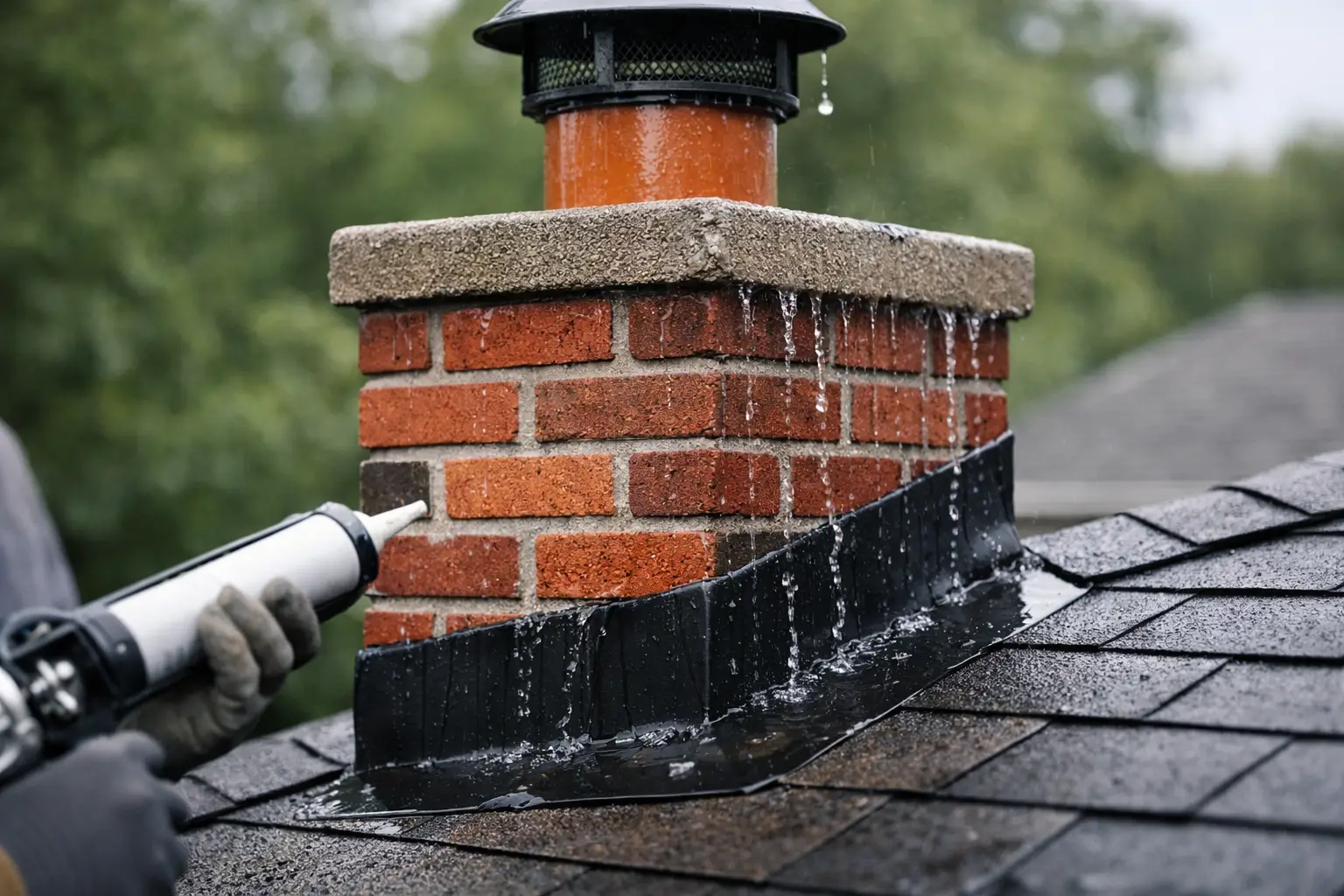
A chimney leak rarely stays a chimney leak for long. What starts as a damp patch near the breast or staining in the loft can quickly turn into damaged plaster, rotten timbers and a much bigger repair bill. If you are wondering how to prevent chimney leaks, the main thing to know is that water usually gets in through failed details rather than through the brickwork alone.
Most chimney leaks come from a small number of problems. Flashing can lift or split, pointing can crumble, flaunching can crack around the pots, and a missing cowl or cap can let rain straight down into the stack. Gutters and roof coverings nearby can also play a part, which is why chimney leaks are sometimes misdiagnosed. The fix depends on where the water is entering, and that is why a proper inspection matters.
How to prevent chimney leaks at the source
The best way to stop chimney leaks is to deal with the parts of the chimney that are designed to keep water out. On most homes, the first area to check is the flashing where the chimney meets the roof. This joint takes a lot of weather and movement over time. If the lead has lifted, cracked, been poorly dressed, or the mortar holding it into the brick joints has failed, water can track in surprisingly easily.
Pointing is another common weak spot. Mortar joints on chimney stacks take more punishment than many other parts of the roof because they are fully exposed on all sides. After years of rain, frost and wind, the mortar can open up and allow moisture into the stack. That does not always mean the whole chimney needs rebuilding. In many cases, careful repointing with the right materials is enough, but if the stack is badly worn, patching it may only buy time.
Then there is the top of the chimney. Flaunching, which is the mortar around the base of the pots, can crack and let water in around the pot itself. A damaged or missing chimney cap can also leave a redundant flue exposed. If the chimney is no longer in use, capping it correctly while still allowing ventilation is often the sensible option. If it is in use, a suitable cowl can help keep rain out while allowing the flue to work properly.
The areas homeowners often miss
When people ask how to prevent chimney leaks, they often focus on the stack and forget the surrounding roof. In reality, a leak near the chimney is not always caused by the chimney alone. Slipped slates or tiles, failed underfelt, blocked valleys, and overflowing gutters can all send water towards that area.
That matters because you can spend money on chimney repairs and still have damp appearing indoors if the real fault sits a few feet away. This is especially common after heavy wind and rain, when water is driven sideways and follows the easiest route under the roof covering. A good inspection should look at the whole area, not just the most obvious crack in the mortar.
Condensation can confuse things as well. If a chimney breast is closed off and the flue has poor ventilation, moisture can build up internally and look like a roof leak. The staining pattern, time of year and weather conditions often give this away, but it is another reason not to guess.
Flashing is often the first line of defence
Lead flashing does a simple job, but it has to be fitted properly. It should sit neatly into the mortar joints, lie correctly over the roof covering and remain secure as the roof expands and contracts. Cheap patch repairs with mastic rarely last long, especially on exposed roofs.
If the flashing is only slightly loose, a targeted repair may be enough. If it is split, badly chased in, or the surrounding mortar has failed, replacement is usually the better option. It costs more upfront than a quick patch, but it tends to save money over time because it addresses the cause rather than the symptom.
On older properties, it is also worth checking whether previous repairs have been carried out with mixed materials. We sometimes see cement mortar used where a more suitable approach was needed, or sections that have been pieced together over the years. Those repairs can hold for a while, but they are rarely the best long-term answer.
Keep mortar, brickwork and flaunching in good order
A chimney stack does not need to be falling apart to leak. Small open joints and hairline cracks can be enough to let in water, especially in winter when repeated freeze-thaw cycles make the damage worse. Once water gets into the stack, it can travel internally and show up well below the point of entry.
Repointing helps when the brickwork itself is still sound. The old loose mortar is raked out and replaced, sealing the joints again and improving weather resistance. If bricks have spalled or become soft, those sections may need replacing as well. The same goes for flaunching around the pots. If it is cracked or breaking away, it should be renewed before more water gets in.
This is one of those jobs where timing matters. Catching deteriorating mortar early is far cheaper than leaving it until the stack becomes unstable or needs partial rebuilding.
Chimney caps, cowls and ventilation all matter
An open flue is an open invitation to rainwater. If the fireplace is no longer used, fitting the correct cap or capping system is one of the simplest ways to reduce the risk of leaks. The key is doing it properly. A completely sealed flue can cause condensation problems, so there still needs to be suitable ventilation.
If the chimney is active, a well-fitted cowl can help reduce rain entry while also improving protection from birds and debris. Not every cowl suits every chimney, though. The right choice depends on whether the fire is in use, the type of fuel and the condition of the flue.
This is a good example of where a one-size-fits-all fix can create another issue. What works on a redundant chimney may not be right for a working one.
Regular checks beat emergency repairs
Most chimney leaks give some warning before they become serious. You might notice damp smells after rain, staining on wallpaper, discoloured plaster near the chimney breast, or bits of mortar on the roof or in the gutters. Outside, you may see visible cracks, loose pointing or vegetation starting to grow from the joints.
The trouble is that many homeowners only act when water is already coming through indoors. By that point, the repair may involve more than just the chimney. Timbers, ceilings and decorations can all be affected.
A simple visual roof check from ground level after bad weather can help spot obvious issues early. Binoculars are useful if you can do this safely, but climbing onto the roof yourself is not worth the risk. Chimneys are high, exposed and often more fragile than they look.
How to prevent chimney leaks for the long term
If you want a lasting result, think in terms of upkeep rather than one-off fixes. Good workmanship on flashing, sound pointing, secure chimney pots, proper caps or cowls, and clear gutters all work together. Ignore one element and the whole area becomes more vulnerable.
It also pays to be realistic about the age of the roof. On an older property, repeated patching around the chimney may not make sense if the surrounding roof covering is also nearing the end of its life. In that case, a broader repair can be the more cost-effective option. It depends on the condition of the roof as a whole, not just the chimney in isolation.
For homeowners in places like Castleford and across West Yorkshire, where roofs take their fair share of wind and rain, staying on top of chimney maintenance is simply part of protecting the house. At 5 Towns Roofing, this is often where experience makes a difference – knowing whether a chimney needs a straightforward repair, a more thorough overhaul, or whether the real issue sits elsewhere on the roofline.
If there is one sensible rule to follow, it is this: do not leave a suspected chimney leak to see if it gets better on its own. Water nearly always finds a way to spread, and the cheapest repair is usually the one done before the damage moves indoors.