

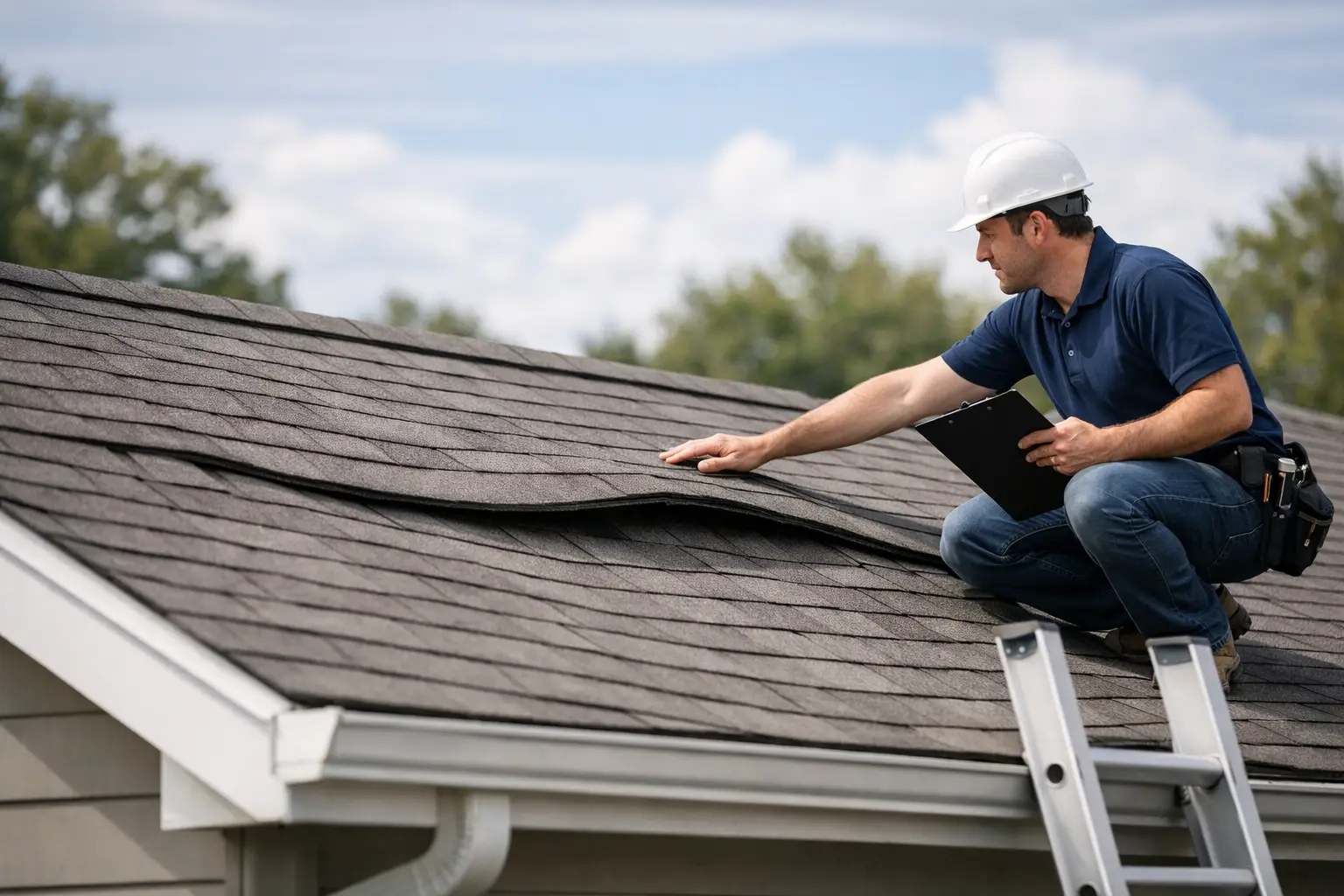
A roof rarely fails all at once. More often, it starts with small signs that are easy to miss from the ground – a dip along the ridge, a ceiling line that looks slightly off, or gutters that no longer sit quite right. If you are wondering how to spot roof sagging, the key is knowing what looks normal and what suggests the structure is starting to give way.
Sagging does not always mean the roof is on the verge of collapse, but it does mean something is wrong. In some cases, the issue is limited to worn timbers or long-term water damage in one section. In others, it points to a wider structural problem that needs urgent attention. Either way, the sooner it is identified, the better the chance of a straightforward repair rather than a much bigger job.
How to spot roof sagging from outside
The first place to look is the roofline itself. Stand back from the property and view the roof from a few angles. A healthy roof should look straight and even. If one area appears to dip, bow or sink lower than the rest, that is one of the clearest signs of sagging.
Pay close attention to the ridge line, which is the top horizontal line where both roof slopes meet. If the ridge curves in the middle or looks uneven, that can suggest movement in the roof structure. The same goes for the slopes on either side. They should run in clean, straight lines. If they look wavy or sunken, there may be a problem beneath the tiles or slates.
You may also notice that the roof appears to droop near the eaves. Sometimes this shows up as a slight downward bend where the roof meets the guttering. Homeowners often assume the gutter is the issue, but the roof edge itself may be settling.
Another clue is tile movement. If tiles look uneven, appear to be slipping, or sit awkwardly in one patch, it can mean the roof deck or supporting timbers underneath are no longer level. That does not always confirm sagging on its own, but it is a warning sign worth taking seriously.
Signs inside the house
You do not always need to get outside to see that a roof is struggling. In many homes, the first signs show up indoors.
Look at the ceilings on the top floor, especially in loft conversions, bedrooms under the roof, and around chimney breasts. If the ceiling line starts to bow, crack or pull away where the wall meets the ceiling, there may be movement above. Fresh plaster cracks are not always caused by roof sagging, but when they appear alongside other symptoms, they deserve attention.
Doors and windows upstairs can also become harder to open or close properly if the structure has shifted. Again, this can happen for other reasons, including general settlement, so context matters. But if it comes with visible roofline dips or signs of damp, it is worth getting checked.
In the loft, the signs are often more obvious. If the timbers look bent, cracked, split or damp, that is a concern. Daylight coming through where it should not, a musty smell, or insulation that feels wet can all point to long-term water ingress, which is one of the common causes of sagging.
What causes a roof to sag
Roof sagging is usually the result of age, moisture, weight, or poor structural support. Sometimes it is one issue. Often, it is a combination.
Water damage is high on the list. When a roof has leaked for a long time, the timber structure can start to rot. Once rafters or joists weaken, they no longer carry the load properly, and sections of the roof begin to dip. This is especially common where slipped tiles, damaged flashing, or blocked guttering have allowed water to keep getting in.
Age also plays a part. Older roofs can gradually lose strength as materials wear down over the years. Timber can dry out, twist or decay, and previous repairs may not have dealt with the root cause. A roof that has managed well enough for decades may start showing movement after one hard winter or a spell of heavy rain.
Extra weight is another factor. Multiple layers of roofing materials, saturated felt, heavy moss growth, or even snow in winter can put more strain on the structure than it was designed to take. Flat roofs can be particularly vulnerable if water is ponding and not draining away properly.
Then there is workmanship. If a roof was poorly built, altered without proper support, or repaired using the wrong materials, weak points can develop. You sometimes see this where chimney removals, loft conversions, or previous patch repairs have changed how loads are distributed across the roof.
When a sag is serious and when it might be minor
Not every uneven roofline means immediate danger, but it should never be ignored. A slight dip that has been stable for years may not need the same response as a roof that has recently started moving, leaking, or cracking internally.
The serious cases tend to have a few things in common. The sag is visible and getting worse. There are active leaks or damp patches. The loft timbers feel soft or look rotten. Tiles are slipping, or the roof has started to spread at the walls. If any of those are happening, it is time to get a professional inspection rather than keep an eye on it.
A smaller localised dip may be repairable if caught early. For example, one weakened section of timber around a chimney or valley might be strengthened and re-roofed without replacing the whole roof. That is why early diagnosis matters. Leave it too long and a local repair can turn into a full re-roof.
How to check safely without making things worse
If you want to understand how to spot roof sagging properly, safety comes first. A visual check from ground level is sensible. Climbing onto the roof is not.
Use binoculars if needed and take a slow look along the ridge, the eaves, and any areas where the roof seems uneven. Inside, check the loft with a torch, but only if you can do so safely and without stepping between joists. Do not push on damp timbers or disturb anything that looks unstable.
Photos can help. If you take clear pictures from the same angle every few months, you can compare whether the dip is changing. That can be useful when speaking to a roofer, especially if the movement has been gradual.
How a roofer will assess sagging
A proper inspection looks beyond the surface. It is not just about whether the ridge looks curved. A roofer will want to know what is causing the movement and whether the structural timbers are still sound.
That usually means checking the roof covering, battens, felt, rafters, purlins, and the way the roof is bearing onto the walls. They will also look for signs of leaks, timber decay, poor ventilation, and failed previous repairs. In some cases, the answer is a targeted roof repair. In others, the safest option is more extensive structural work or a full replacement.
The honest answer is that it depends on what is found once the roof is opened up. A tidy-looking roof from the outside can hide rotten timbers beneath. Equally, a roof that looks a little uneven may be less advanced than feared. That is why guessing from the ground only gets you so far.
How to spot roof sagging before winter makes it worse
A sagging roof nearly always gets worse under bad weather. Heavy rain adds moisture, strong winds exploit weak spots, and cold spells can make existing damage more obvious. If you have noticed a dip in summer and put it off, winter often forces the issue.
That is particularly true in older properties around Castleford and across West Yorkshire, where roofs have already seen decades of weather and repair work. A small structural weakness can quickly become a leak, and a leak can quickly become rotten timber.
The best time to act is when the warning signs first appear, not after water is running into the loft. If the roofline looks wrong, if ceilings are cracking, or if the loft smells damp and the timbers look tired, trust what you are seeing and get it checked.
A sound roof should look straight, feel solid, and keep the weather out without fuss. If yours is starting to tell you otherwise, it is worth listening before a small dip becomes a much bigger problem.