

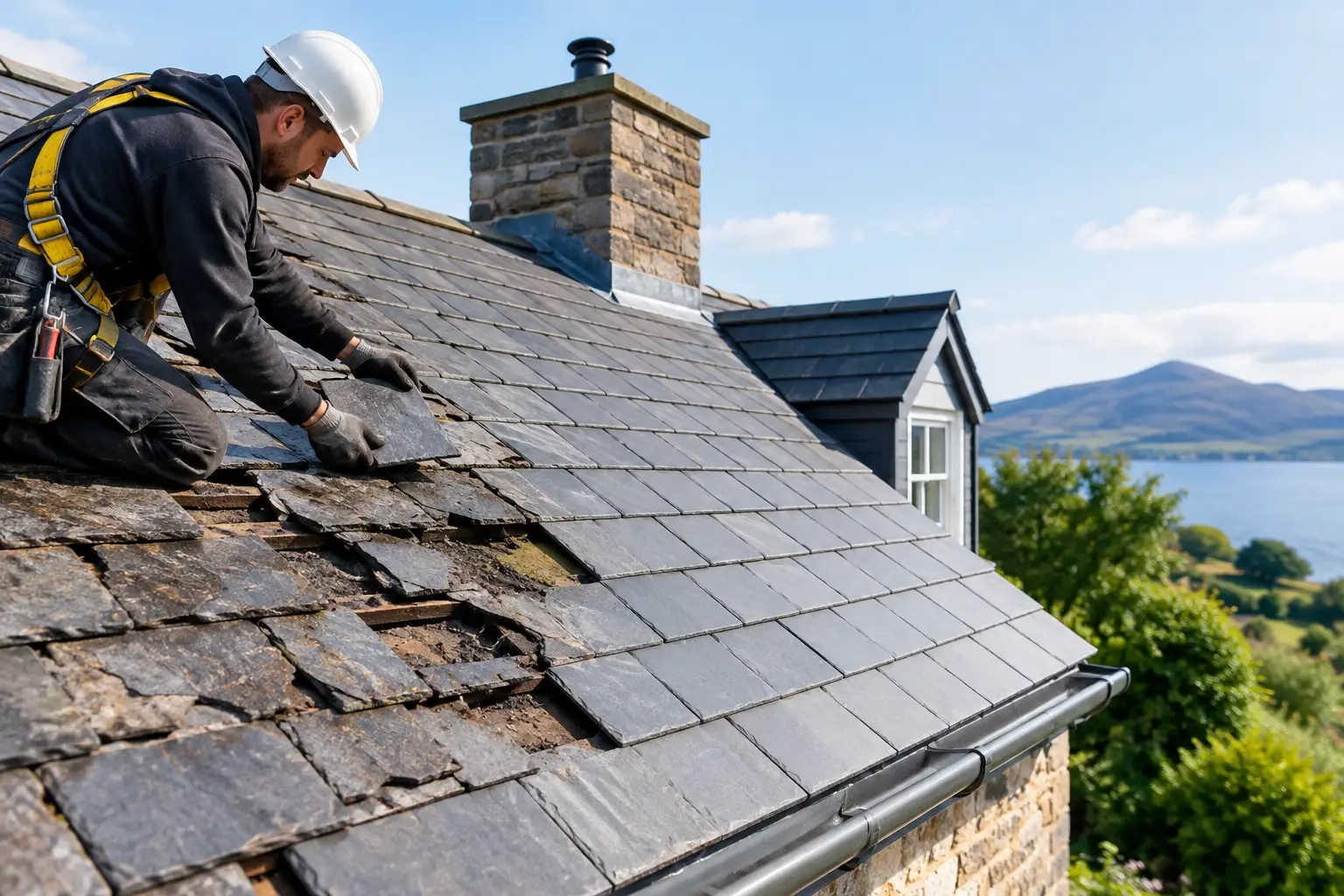
A slate roof can outlast several generations of homeowners, but it is not maintenance-free. Slate roof restoration is often the right way to stop leaks and protect a property’s character without tearing off a roof that still has plenty of sound material left. The key is finding the real cause of the problem before deciding whether repairs, a larger restoration or a full replacement is the sensible investment.
For homes across Castleford and West Yorkshire, roofs take a fair amount of punishment from driving rain, frost, wind and blocked gutters. A loose slate may look minor from the ground, yet water can work its way beneath surrounding slates and into the roof space. Acting early normally keeps the work more straightforward and the cost more manageable.
What slate roof restoration really involves
Restoration is not simply putting a few loose slates back into place. A proper assessment looks at the roof as a whole: the condition of the slates, fixings, battens, ridge tiles, valleys, leadwork, chimneys and roofline. Water does not always enter where a stain appears inside the house, so guessing can lead to repeat repairs and unnecessary expense.
Where the main covering remains sound, restoration may include replacing damaged or missing slates with suitable reclaimed or matching replacements, renewing failed fixings, repairing mortar bedding at the ridge and verges, and attending to worn lead flashings around chimneys or abutments. It may also involve repairing sections of timber where a long-running leak has caused localised decay.
The aim is to retain good original slate wherever possible. Natural slate is a durable material and, when properly fixed, can perform for many decades. Replacing sound slate just because several pieces have slipped is rarely the best answer.
The signs your slate roof needs attention
A roof does not need to be actively leaking into a bedroom before it deserves inspection. Missing, cracked or visibly slipped slates are clear warning signs, particularly after high winds. Pieces of slate in the gutter or on the ground should never be ignored.
Inside the property, damp marks on ceilings, peeling paint near chimney breasts, a musty smell in the loft or daylight visible through the roof covering all need prompt investigation. Damp insulation is another clue. These symptoms can have different causes, including condensation, so a roof inspection should identify the source rather than assume every mark is a failed slate.
Look closely at the roofline too. Sagging gutters, overflowing gutters and rotten fascias can direct water back towards the eaves and cause trouble around the lower courses of slate. A complete repair should deal with connected issues, not just the most obvious one.
When repair is the better option
Local repairs and sympathetic restoration make good sense when most of the slate remains in good condition and the problem is limited. A small number of storm-damaged slates, failed leadwork around a chimney, a leaking valley or loose ridge tiles can often be repaired without disturbing the wider roof.
Fixings are particularly important on older roofs. Traditional nails can corrode over time, a problem often called nail sickness. The slate itself may still be perfectly usable, but it starts slipping as the fixing weakens. In some cases, carefully renewing affected areas extends the roof’s useful life significantly.
Repair is also a good option where a property has attractive, good-quality original slate that would be difficult or expensive to replace like for like. The appearance of a slate roof depends on the size, thickness, colour and pattern of the slates, so a careful roofer will aim for replacements that sit naturally within the existing covering.
That said, patch repairs should not become an endless cycle. If slates are failing across several slopes, battens have deteriorated widely or the roof has been repaired repeatedly over a short period, the better long-term choice may be more extensive work.
When full replacement may be wiser
There comes a point where restoring a roof is no longer the most cost-effective route. If a large proportion of slates are delaminating, breaking down or slipping because the fixings have failed throughout, a full re-roof can provide greater certainty. Widespread rotten battens, poor past workmanship and recurring leaks across different areas are also serious concerns.
A full replacement gives access to the roof structure and allows new breathable membrane, battens and fixings to be installed correctly. It can be the right opportunity to improve insulation at loft level, subject to the property and ventilation requirements. However, it is a larger project and should not be recommended merely because it is easier than diagnosing a repair.
The choice depends on the age and condition of the existing roof, the quality of the slate, the extent of hidden defects and your plans for the property. An honest inspection should explain what can realistically be repaired, what work may be needed later, and what each option is likely to achieve.
Why cleaning and coating are not restoration
Homeowners sometimes see heavily weathered slate and assume it needs pressure washing or a coating. In most cases, this is not advisable. Aggressive cleaning can damage older slates, disturb fixings and force water under the roof covering. Moss may look untidy, but it is not automatically proof that a roof has failed.
Coatings can also create problems if they trap moisture or disguise underlying defects. A slate roof is designed to shed water through its overlapping courses, not through a painted surface. The priority should be sound slates, secure fixings, clear drainage and properly formed flashings.
Gentle removal of loose debris from valleys and gutters may be appropriate, but it should be done safely and without walking carelessly across the roof. Slate is brittle under concentrated weight, even when it looks sound from below.
What a proper slate roof inspection should cover
A worthwhile inspection starts from ground level and, where safe, includes a closer check of the roof covering and roof space. The condition of the slate needs to be considered alongside ridges, verges, valleys, chimney flashings, gutters and roof timbers.
The roofer should be able to explain the findings in plain terms. You should know whether the leak comes from a broken slate, defective leadwork, an overflowing gutter, damaged pointing or another source altogether. You should also understand which work is urgent and which items can be monitored.
At 5 Towns Roofing, the approach is to recommend the work the roof needs, not push a full replacement where a durable repair will do the job. With over 25 years of experience, that means looking beyond the immediate leak and making sure connected roofline details are not left to cause the next problem.
Choosing the right contractor for slate work
Slate work calls for care as well as roofing knowledge. Poorly matched slates, visible modern repairs, incorrect laps or unsuitable fixings can spoil both the appearance and performance of the roof. On period homes especially, a rushed repair can stand out for all the wrong reasons.
Ask how the contractor will access the roof, whether damaged slates will be replaced with suitable alternatives, and how surrounding areas will be protected while work is underway. It is also reasonable to ask about workmanship guarantees and what is included in the quote. A clear written scope helps avoid confusion over items such as chimney repairs, lead flashings, gutter clearing or timber repairs discovered after the roof is opened up.
Price matters, but the lowest quote is not always the fairest value. A small saving can disappear quickly if the repair uses unsuitable materials or misses the underlying cause of the leak. Local, accountable workmanship and clear communication are worth far more when the work is protecting your home.
If you have noticed slipped slates, damp patches or damage after bad weather, arrange an inspection before the next spell of rain turns a manageable repair into a larger job. A well-kept slate roof deserves careful attention, and timely work can help it keep doing its job for years to come.