

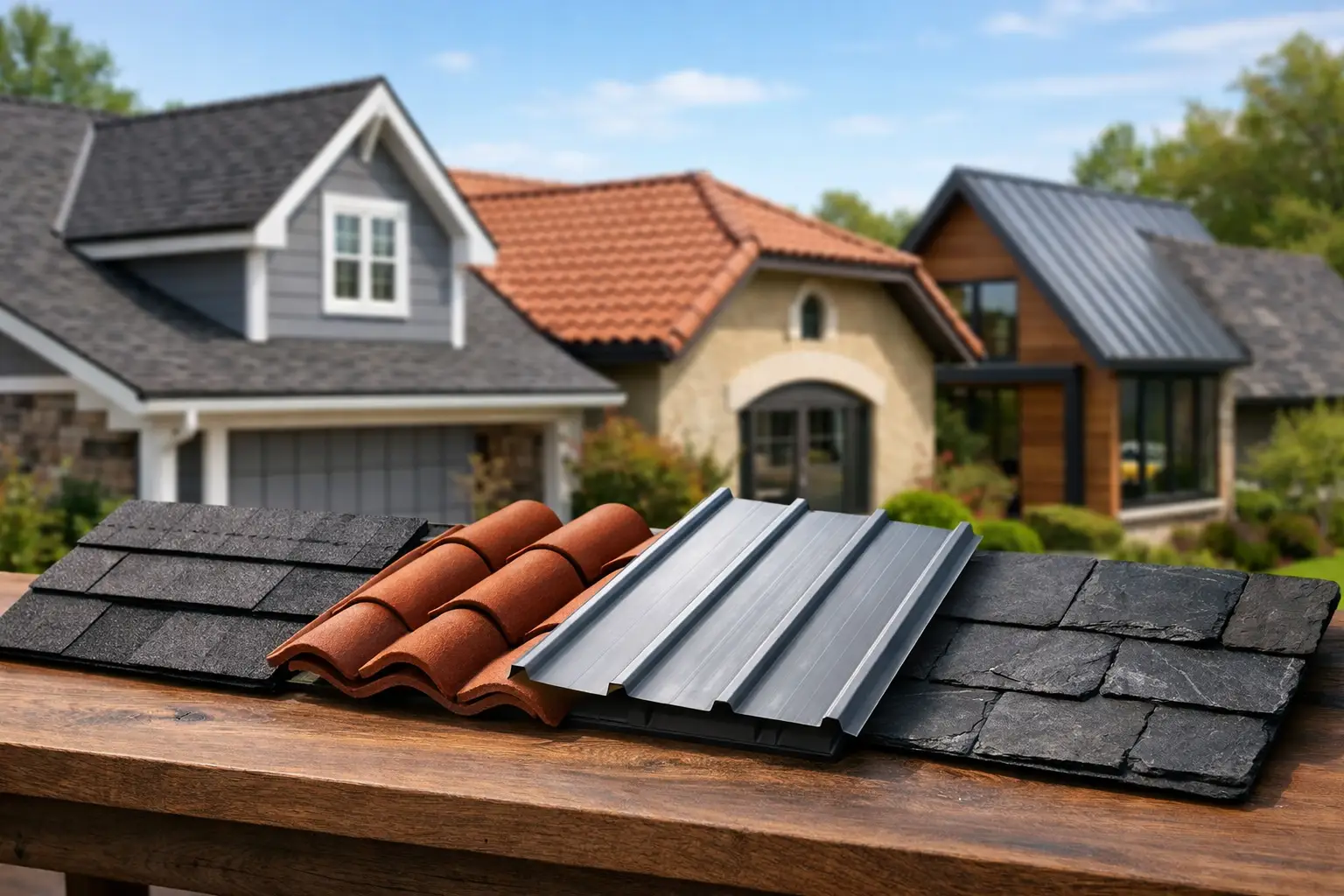
A new roof is not simply a choice between what looks best from the road. The right roof materials need to suit your property, its existing structure, the roof pitch and the weather it faces year after year. In Castleford and across West Yorkshire, that means choosing a covering that can handle persistent rain, high winds, frost and the occasional heavy downpour without becoming a constant repair job.
Price matters, of course, but the cheapest option at the start is not always the best value over the life of the roof. A dependable roofer will look at the whole job before recommending a material: the condition of the timbers, underfelt and battens, the flashing around chimneys, the gutters, fascias and soffits, and whether the roof needs repairs or a full re-roof.
Roof materials for pitched roofs
Most homes in the area have a pitched roof, commonly finished with concrete tiles, clay tiles or slate. Each has a place, and the best choice depends on the building as much as the budget.
Concrete roof tiles
Concrete tiles are one of the most common choices for modern homes and replacements. They are widely available, hard-wearing and come in a good range of profiles and colours. Whether you have a traditional interlocking tile roof or a more decorative profile, concrete often provides a sensible balance between appearance, strength and cost.
They are heavier than some alternatives, so the roof structure must be suitable for them. On an older property, this is worth checking properly rather than assuming a like-for-like replacement will cause no issues. Concrete tiles can also fade or become more porous as they age, particularly if moss is allowed to build up, but a well-installed roof with sound underlay and ventilation should give many years of service.
For homeowners who want a practical, familiar-looking roof without the cost of natural slate, concrete tiles are often a solid option.
Clay roof tiles
Clay tiles have a traditional appearance that suits many period homes, cottages and properties in conservation-minded areas. Their colour runs through the material rather than sitting as a surface finish, which helps them retain their character as the years pass. Good-quality clay can last a very long time when it is properly fitted.
The trade-off is cost. Clay tiles tend to be more expensive than concrete, and individual tiles can be brittle if walked on carelessly or struck by falling debris. They must also be fitted with the correct fixings and spacing, especially where roofs are exposed to wind.
If you are replacing an existing clay roof, matching the tile shape, colour and size matters. A roof that is technically watertight can still look wrong if new sections do not sit naturally alongside the original covering.
Natural slate
Natural slate is one of the longest-lasting roofing materials available. It gives a distinctive finish, works particularly well on older Yorkshire properties and can outlast many other roof coverings when the slates, fixings and supporting roof structure are all in good order.
However, slate is not automatically the right answer for every home. It is a premium material and requires skilled installation. The roof needs to carry its weight, and repairs need a roofer who understands how to replace individual slates without damaging the surrounding area. Cheaper imported slate can vary in quality, so the source and grade should be considered rather than choosing on price alone.
For a home where appearance, lifespan and traditional character are priorities, natural slate can be an excellent investment. For a straightforward rental property or a tight replacement budget, concrete tile may be the more sensible route.
Fibre cement slate
Fibre cement slates offer a lighter, more affordable alternative to natural slate. They can give a clean, uniform finish and may be useful where the roof structure cannot take the weight of a natural slate covering. Modern products are far removed from older materials people may associate with asbestos, but any existing old roof should always be assessed carefully before work begins.
Their expected lifespan and appearance are different from natural slate, so it is best not to view them as identical. They are a practical option where weight and budget are the main concerns, rather than a direct substitute for the character of real slate.
Flat roof materials need the right system
Flat roofs are common on garages, extensions, dormers and porches. Despite the name, a flat roof should never be completely level. It needs a slight fall to guide rainwater towards the outlet or gutter. Standing water is one of the quickest ways for a tired flat roof to fail.
Traditional felt roofing remains a familiar choice, particularly for smaller areas. A modern high-performance felt system, installed in layers with proper edge detailing, can be reliable and cost-effective. The quality of the preparation underneath is just as important as the surface material.
EPDM rubber roofing is another popular option. It is usually fitted as a single membrane, which means there are fewer joints across the main roof area. It is flexible, durable and well suited to many domestic flat roofs. Careful detailing around outlets, upstands and roof edges remains essential, as these are the areas where leaks often start.
GRP fibreglass roofing creates a tough, seamless finish and is often chosen for extensions where a neat, long-lasting result is wanted. It needs dry conditions and correct installation, so it is not a job to rush between showers. Like all flat roof systems, it performs best when insulation, drainage and trims are dealt with as part of the same job.
The best flat roof material depends on the size and shape of the roof, how it will be used, the amount of foot traffic it receives and the condition of the decking beneath. Covering over rotten boards or ignoring a poor fall only delays a bigger problem.
What matters beyond the roof covering
Homeowners often focus on the visible tiles or membrane, but water can enter a roof through several other points. Flashing around chimneys, valleys, abutments and roof windows has to be sound. Ridge tiles and verge tiles need secure bedding or mechanical fixing. Damaged underfelt can allow wind-driven rain into the loft even when the outer tiles look acceptable.
Ventilation is another detail that should not be missed. Warm, moist air from inside the house can condense in an unventilated roof space, leading to damp insulation, mould and timber decay. The right ventilation arrangement depends on the roof design, but it should be considered during a re-roof rather than treated as an afterthought.
Guttering and roofline work also affect how well a roof performs. Blocked or overflowing gutters can soak the fascias, brickwork and foundations below. If the fascias and soffits are reaching the end of their life, replacing them while the roof is being renewed can save disruption later and give the whole roof edge a proper finish.
How to choose between roof materials
Start with the roof you already have. If a few slipped tiles or a local leak are the issue, a targeted repair may be the right answer. A full replacement makes more sense where there are widespread broken tiles, failing underfelt, recurring leaks, loose ridge work or a roof that is simply reaching the end of its useful life.
Then consider the property’s style and structure. A heavy slate roof may suit a solid Victorian home but not every extension. A low-pitch roof may require a particular tile type or a flat-roof system because standard tiles cannot shed water effectively at that angle. Planning restrictions can also apply in some locations, particularly where the home is listed or lies within a conservation area.
Finally, ask for a clear written quotation that explains the proposed material and the work around it. It should make clear whether old coverings will be removed, whether rotten battens or decking are included if found, how waste will be dealt with, and what guarantee is provided. A low figure that leaves these details vague can become expensive once work is under way.
With more than 25 years of experience, 5 Towns Roofing approaches material choice in a straightforward way: inspect the roof properly, explain what is needed and recommend a solution that suits the home rather than forcing every job into the same package.
A roof should give you confidence when the weather turns. Choosing suitable materials, backed by careful installation and regular attention to small faults, is the best way to keep your home dry, protected and free from avoidable worry.