

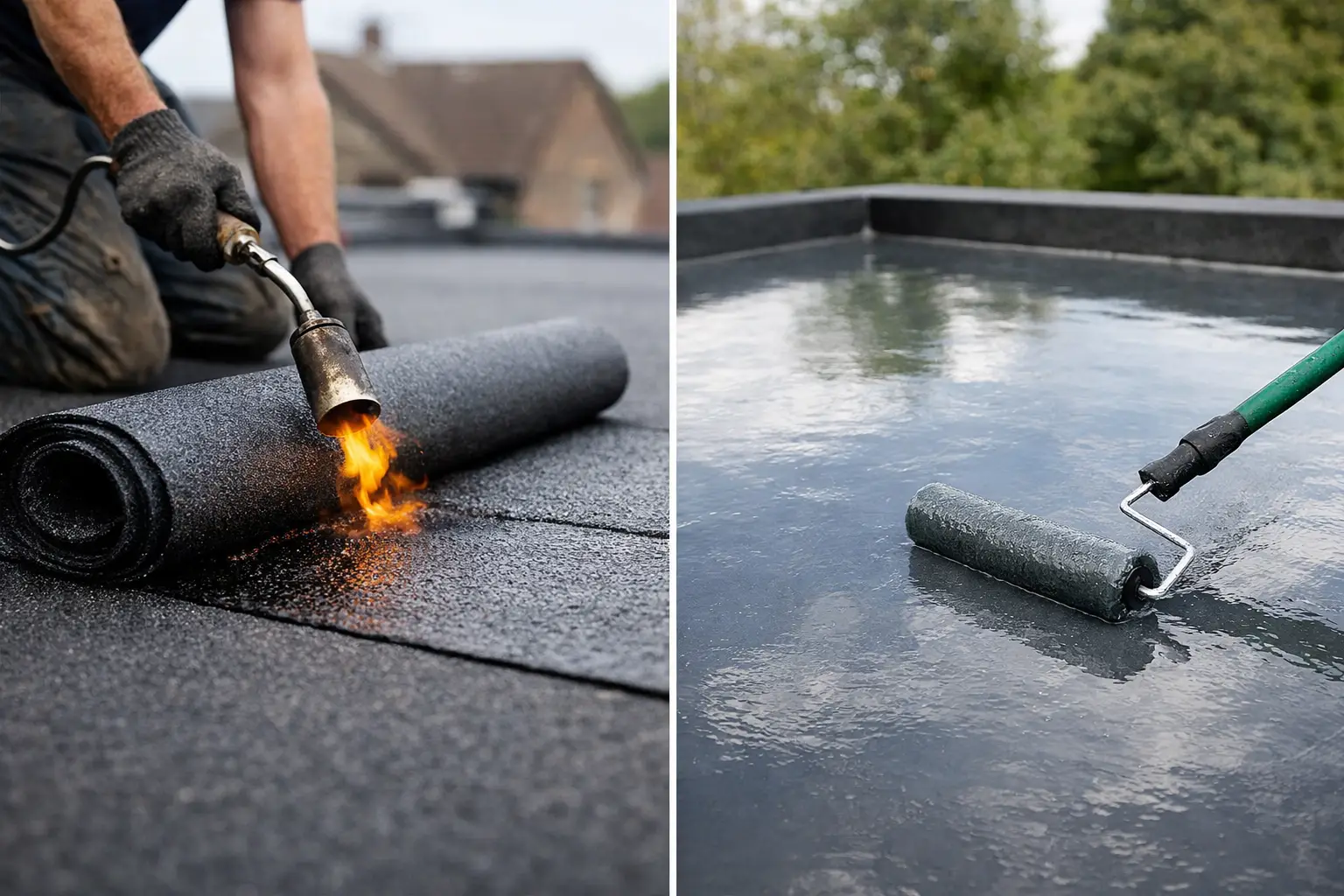
If your flat roof is starting to leak, blister or simply look tired, the question usually comes down to felt roof vs fibreglass. Both are common choices for garages, extensions, porches and dormers, but they do not perform in exactly the same way. The right answer depends on your budget, the condition of the roof deck, how long you plan to stay in the property and how much future maintenance you are willing to deal with.
A lot of homeowners assume one system is old-fashioned and the other is automatically better. In practice, it is not that simple. A properly fitted felt roof can give solid service for years, while a badly laid fibreglass roof can still cause trouble. The material matters, but the standard of installation matters just as much.
Felt roof vs fibreglass at a glance
Felt is often chosen when cost is the main concern or when a straightforward replacement is needed on a smaller flat roof. Modern torch-on felt is not the same as the basic shed felt many people picture. It is stronger, layered and far more durable than older materials.
Fibreglass, often called GRP, is a resin-based flat roofing system that forms a hard, seamless finish. It is popular because it looks neat, lasts well and tends to need less attention once installed properly. It can be an excellent option for homeowners who want a long-term flat roofing solution.
That said, neither option is right for every roof. Size, shape, access, drainage and timing all play a part.
How a felt roof compares on cost and value
For many households, price is the first thing to look at. Felt is usually the cheaper option upfront. If you are replacing an older garage roof or trying to keep a project affordable, that can make it very appealing.
The lower initial cost does not always mean poor value. A well-installed modern felt roof can perform well and give a respectable lifespan. It is also a practical choice where a roof may need future alterations, as felt repairs can often be carried out without replacing the whole covering.
Fibreglass generally costs more at the start. The materials and fitting process are usually more expensive, but the trade-off is durability and a cleaner finish. Over a longer period, some homeowners find fibreglass works out better value because it can last longer and may need fewer repairs.
So if the main priority is keeping the initial bill down, felt often comes out ahead. If the aim is to invest once and avoid repeated patch-up work, fibreglass often deserves a closer look.
Lifespan and day-to-day durability
When comparing felt roof vs fibreglass, lifespan is one of the biggest differences. Modern felt systems can last well when installed correctly, but they are generally more vulnerable to wear over time. Sun exposure, standing water and movement in the structure can all shorten their life.
Fibreglass is typically seen as the longer-lasting option. Once cured, it forms a tough surface that stands up well to weather and does not have the same seams or overlaps that felt systems rely on. Fewer joins often means fewer weak points.
This matters in West Yorkshire, where roofs have to cope with regular rain, cold snaps and the usual mix of wind and damp conditions. A flat roof needs to shed water properly and hold up through changing temperatures. Both systems can do that, but fibreglass tends to have the edge where long-term resistance is concerned.
Even so, a long lifespan only comes with proper workmanship. Poor preparation underneath will shorten the life of any flat roof, whether it is felt or fibreglass.
Appearance and finish
Looks are not the only factor, but they do matter, especially on extensions and visible porch roofs. Felt has a more traditional appearance. On some properties that is perfectly fine, especially where the roof is out of sight.
Fibreglass usually gives a smarter, sharper finish. It can look more modern and uniform, which is one reason it is often chosen for newer extensions. If the flat roof is clearly visible from upstairs windows or from the garden, some homeowners prefer the cleaner look of GRP.
This is not just about appearances for the sake of it. A roof that looks tidy and professionally finished also gives confidence that the job has been done properly.
Repairs and ongoing maintenance
One area where felt can work in its favour is repairability. If a felt roof suffers local damage, it is often possible to repair a section without starting again from scratch. For some homeowners, that flexibility is useful.
Fibreglass is low-maintenance when installed well, but repairs can be more noticeable if damage does occur. The surface is hard and durable, though if cracking or impact damage happens, the repair needs to be handled properly to maintain a watertight finish.
In everyday terms, felt may need more attention over the years, while fibreglass often asks less of you once it is in place. That is why the choice often comes down to whether you want a lower starting cost or fewer likely issues later on.
Installation conditions matter more than many people realise
A fibreglass roof needs the right conditions during installation. The deck must be in good condition, the surface must be dry, and the weather needs to be suitable for resin work. If the job is rushed or carried out in poor conditions, problems can follow.
Felt also needs proper preparation, but it can sometimes be the more practical option where conditions are less straightforward. That is one reason experienced roofers assess the roof itself before recommending a system. What works well on one garage may not be the best answer for a kitchen extension next door.
This is where local experience counts. On older properties especially, the roof underneath may have hidden issues with timber, insulation or ventilation that affect the best choice of covering.
Which option suits different types of flat roof?
For a basic garage or outbuilding where budget is the key concern, felt is often a sensible and cost-effective choice. It does the job well when installed to a good standard, and for many homeowners that is all they need.
For a main extension, bay top or dormer where appearance and lifespan matter more, fibreglass is often the stronger option. It gives a neater finish and tends to suit roofs that are more visible or more important to the overall performance of the home.
If the roof has awkward details, upstands or edge trims, fibreglass can also be useful because it creates a continuous surface. Felt can still be used successfully on more complex roofs, but the quality of detailing becomes even more important.
Felt roof vs fibreglass for leaks and weather resistance
Any flat roof can leak if it is poorly installed, damaged or simply worn out. That said, the weak spots are often different. Felt roofs rely on bonded layers and joints, so over time those areas can become more vulnerable. Water can also exploit splits, blisters or lifting edges.
Fibreglass has the advantage of being seamless across the main field of the roof. That reduces the number of points where water can get in. It is one of the main reasons many homeowners see it as the more dependable long-term option.
Still, drainage remains crucial. If a flat roof is holding standing water because of poor falls or sagging boards, no material will perform at its best. Sometimes the real issue is not the top covering at all, but the structure underneath.
So, which is better?
If you want the simplest answer, fibreglass is often the better all-round performer for homeowners who want a durable, smart-looking flat roof and are willing to pay more upfront. Felt is still a good option where value for money matters, especially on smaller or less visible roofs.
The mistake is treating every flat roof as if the decision should be the same. A cheap covering on the wrong roof can become expensive later. A premium system on a basic outbuilding may be more than you actually need.
The best approach is to look at the roof as a whole – its age, deck condition, drainage, use and expected lifespan. That is why a proper inspection matters more than guesswork or choosing based on one online price.
At 5 Towns Roofing, we often speak to homeowners who have been told there is only one right answer. Usually there is not. There is a right answer for that roof, on that property, with that budget.
If you are weighing up felt and fibreglass, think beyond the material alone. Ask how long you want the roof to last, how visible it is, what state the structure is in and whether you want the lowest upfront cost or the strongest long-term return. A flat roof should give you peace of mind when the rain starts, not another job to worry about next winter.