

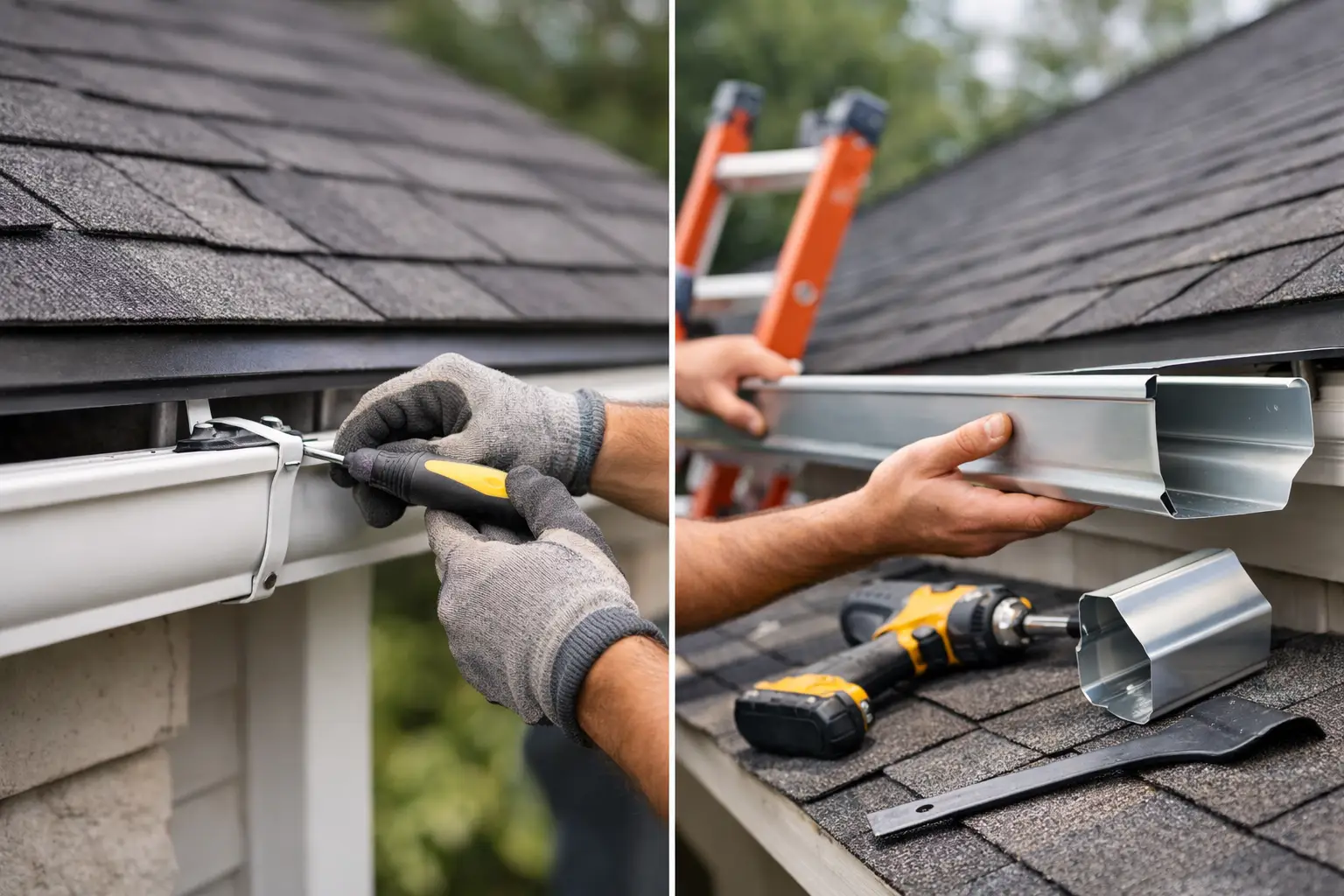
A gutter that drips at one joint may need a straightforward repair. A gutter that is sagging along the whole rear of the house, pulling away from rotten fascia boards and overflowing every time it rains is a different job altogether. Knowing where your property sits on the gutter repair vs replacement question can prevent a small roofline issue becoming damp, damaged brickwork or a costly internal leak.
For homeowners in Castleford and across West Yorkshire, the right answer is rarely about choosing the cheapest option for today. It is about choosing work that will protect the property properly through the next spell of heavy rain, wind and winter weather.
When gutter repair is the sensible choice
A targeted repair is often the best value where the rest of the guttering is sound. Modern uPVC gutters can last many years if they are correctly fitted, kept clear and not left carrying standing water. There is no need to replace a full run simply because one section has developed a fault.
Common repairable problems include a leaking union, an end cap that has worked loose, a slipped bracket, a small crack, or a downpipe that has become disconnected. Blockages are also a frequent cause of apparent failure. Leaves, moss from the roof and general debris can stop water reaching the downpipe, so it spills over the front or back of the gutter instead.
If the gutter line is generally straight, the brackets are secure and water is flowing the right way once cleared, a repair can restore it without unnecessary expense. The same applies after a localised impact or storm damage, provided the surrounding sections have not become brittle or distorted.
A proper repair should deal with the cause, not just the visible drip. For example, sealing a joint may stop water for a while, but it will not last if the gutter is holding water because it has the wrong fall. Likewise, refitting a bracket alone will not solve the problem if the fascia board behind it is soft and no longer able to hold a fixing securely.
Signs a repair is likely to last
Repair is usually a sensible route when the issue is limited to one or two areas, the gutter material is still in good condition, and the fascia and soffits are firm. It also helps if the gutter has not repeatedly failed in the same place.
Look for a clean, even gutter run with no obvious bowing. After rain, water should travel towards the outlet without pooling. A little dirt around a joint is normal, but green staining down the wall, peeling paint or damp patches beneath the eaves suggest water has been escaping for some time and deserve closer inspection.
When gutter replacement makes more sense
Replacement becomes the better long-term option when faults are widespread or the guttering is near the end of its useful life. Repeated patching can seem cheaper, but several call-outs, temporary seals and replacement fittings soon add up. More importantly, unreliable guttering leaves the house exposed every time the weather turns.
Cracked or brittle plastic is a clear warning sign. Older uPVC can become weak after years of sun, frost and movement, especially where it has been repaired more than once. If one section is failing because the material has aged, neighbouring lengths may not be far behind.
Persistent sagging is another reason to consider a new system. Gutters should have a controlled fall towards each downpipe. If they dip in the middle, water sits in the channel, adding weight and making the sag worse. New brackets may help in some cases, but replacement is often more reliable where the gutter has warped or the fixing points are no longer sound.
It is also worth replacing guttering during wider roofline work. If fascias and soffits are rotten, damaged or due for replacement, removing and refitting tired gutters is false economy. A full fascia, soffit and gutter replacement gives the roof edge a secure base and a consistent finish, with correctly positioned outlets and downpipes.
Problems that usually point to replacement
A full replacement should be seriously considered where there are multiple leaks along the run, frequent overflowing despite cleaning, loose gutters in several places, splits in more than one length, or visible staining and deterioration to the fascia boards. Water running behind the gutter is particularly concerning because it can soak the timber roofline before it becomes obvious indoors.
The size of the system matters too. Some properties have extensions, conservatories or roof alterations that direct more water into a gutter than it was designed to handle. If the gutter is in good condition but cannot cope during heavy rain, replacing it with a larger-capacity system or improving the downpipe arrangement may be the practical answer.
Gutter repair vs replacement: what affects the cost?
The cost is not simply based on metres of guttering. Access, height, the condition of the fascias, the number of corners and outlets, and whether downpipes need altering all affect the job. A repair may involve only a fitting and a short section of gutter, while a replacement may require safe access to the full roofline and removal of old materials.
That said, price should be judged alongside expected lifespan. A small repair on a sound system can be excellent value. Spending money to patch old, brittle gutters with failing fascias is often money spent twice. An honest inspection should make clear whether a repair is a worthwhile fix or only a short delay before replacement.
Homeowners should also be cautious about quotes that focus only on the gutter itself. The fascia board is what supports the gutter brackets. If the board is rotten, covering it with a new gutter does not create a durable installation. The underlying roofline condition needs checking before work is agreed.
Do not ignore the signs inside the property
Gutter problems do not always announce themselves with a dramatic overflow. Sometimes the first sign is a damp mark on an upstairs wall, mould near a ceiling edge, flaking paint around a window or a musty smell in a bedroom. Water may be tracking behind the fascia, into the eaves or down an external wall before it reaches somewhere visible.
External clues can be just as useful. Watch for dark streaks on brickwork, eroded pointing, puddles near the foundations and moss growth below gutter joints. These signs do not always mean the gutter is the only problem, but they are good reasons to have the roofline checked rather than guessing.
Storms deserve particular attention. High winds can lift gutter sections, loosen brackets and dislodge downpipes. Clearing debris after autumn and checking the system after severe weather is far easier than dealing with water damage later.
Choosing the right work for your property
The best decision comes from looking at the whole system: gutters, outlets, downpipes, fascias, soffits and the edge of the roof. A repair is right when it resolves a local fault on an otherwise dependable installation. Replacement is right when the system has multiple weaknesses, cannot carry water effectively or is attached to roofline materials that are deteriorating.
At 5 Towns Roofing, we take a straightforward approach: assess the condition, explain what has caused the issue and recommend the work that makes sense for the home. Whether that is a simple repair or a full roofline replacement, the aim is tidy workmanship and a result built to stand up to Yorkshire weather.
If you can see water overflowing, staining walls or pulling at the gutter brackets, do not wait for the next downpour to decide. A timely inspection can give you a clear answer and help keep a manageable gutter problem from reaching the roof, walls or inside of your home.