

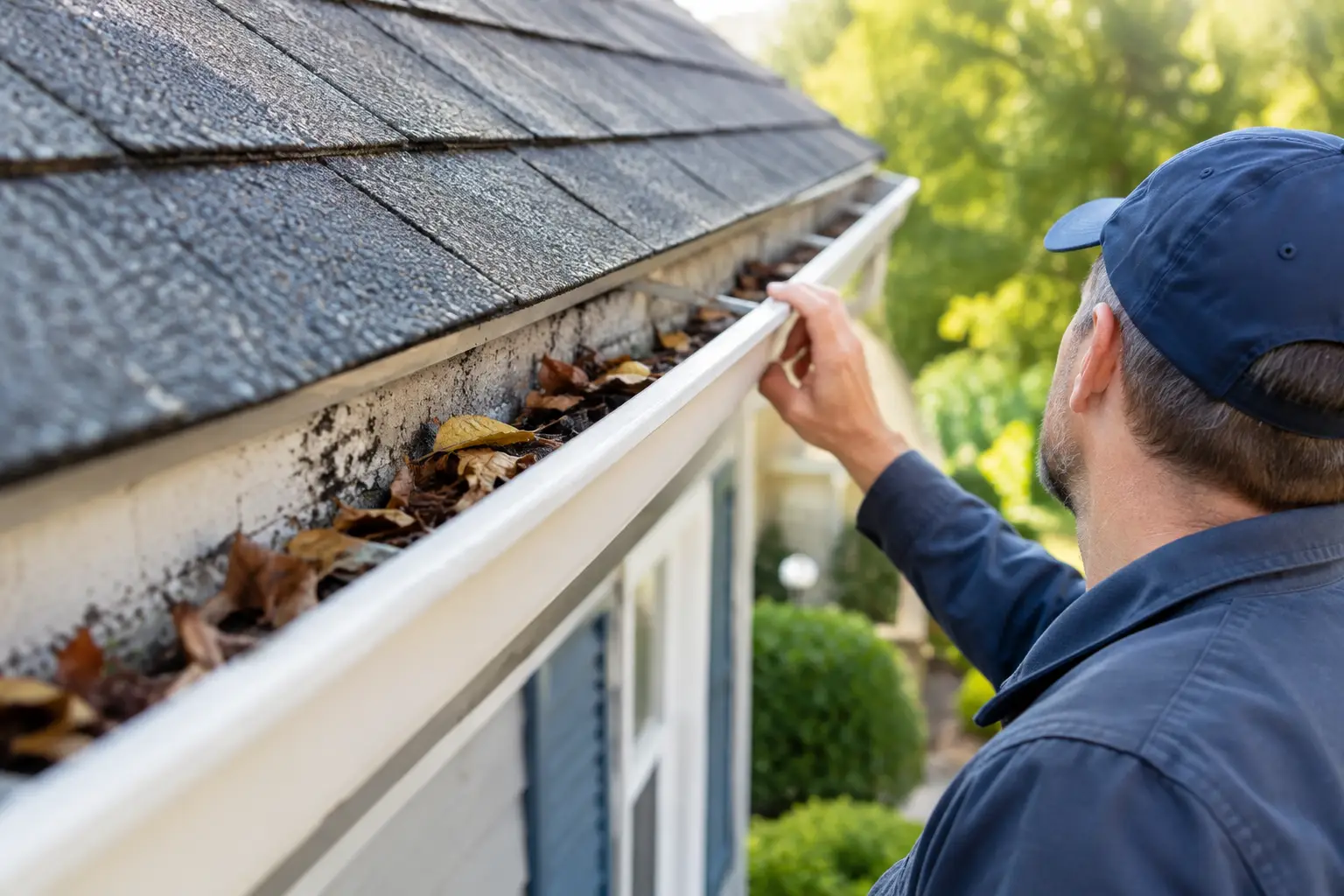
A gutter that overflows in a downpour is not just an inconvenience. Water can run down brickwork, soak the ground around your home and find its way behind fascias or into the roofline. Gutter replacement is often the sensible answer when repairs are no longer holding, especially on older properties where several parts of the system are reaching the end of their working life.
A sound guttering system quietly does a vital job: it moves rainwater safely away from the roof and walls. When it fails, the effects can build up gradually. Damp patches, peeling paint, stained brickwork and rotten timber are all problems that can become more costly than dealing with the guttering in the first place.
Gutter replacement: signs it is time to act
Not every leak means the whole system needs replacing. A loose bracket, a split joint or a section blocked by leaves can often be repaired. However, repeated patching is rarely good value if the gutters are brittle, badly fitted or sagging along several lengths.
Water is overflowing or running behind the gutter
Overflowing water may be caused by a blockage, but it can also point to poor falls in the gutter run. Gutters need a slight, consistent slope towards the downpipe. If water sits in the middle, spills over the back or pours from several joints, the system may have moved over time or been fitted incorrectly. Clearing debris may help temporarily, but it will not correct a poorly supported gutter.
Joints keep leaking or sections have cracked
Plastic guttering naturally expands and contracts as temperatures change. Over many years, seals can fail, clips can loosen and uPVC can become brittle. A single damaged joint is usually straightforward to repair. Cracks appearing in several places, or gutters that pull apart during heavy rain, are stronger signs that replacement is due.
Your fascias show signs of rot or staining
Gutters are fixed directly to the fascia boards, so a long-term leak often affects the timber behind them. Flaking paint, dark staining, soft areas or visible rot should not be ignored. Replacing the guttering alone without checking the fascia can leave the real issue hidden behind a fresh installation.
The gutter line is visibly sagging
A gutter should sit neatly against the roof edge and keep a clean line across the property. Sagging sections can collect water and debris, putting extra weight on the brackets. This is common where old brackets have weakened, fixings have pulled loose, or the roofline timber is no longer sound enough to support them.
Repair or replace: which is the better value?
The right choice depends on the condition of the whole system, not just the most obvious fault. If your gutters are relatively modern and the issue is limited to one blocked downpipe, failed seal or damaged bracket, a repair is usually the practical option. It is quicker, less disruptive and avoids replacing materials that still have plenty of life left.
Replacement makes more sense when problems are widespread. This includes repeated leaks, multiple cracked lengths, gutters that hold standing water, failing brackets and tired fascias. It can also be worthwhile during a re-roof, as access is already in place and the new roofline can be finished properly as one job.
The cheapest quote is not always the best value. A gutter system needs suitable bracket spacing, secure fixings and correct falls towards the downpipes. Fitting a new length over rotten timber, or using too few brackets to save time, can lead to the same problems returning far sooner than they should.
Choosing the right guttering for your property
Most homes in Castleford and across West Yorkshire are fitted with uPVC guttering. It is a sensible choice for many properties because it is durable, low maintenance and available in familiar black, white, brown and grey finishes. It will not rust and is generally straightforward to repair or extend later if needed.
The profile matters as well as the colour. Half-round gutters suit many traditional houses and smaller roof areas, while square-line styles offer a more angular appearance and can carry a good volume of water. Deep-flow guttering may be a better choice for larger roofs, steep pitches or areas that regularly deal with heavy rainfall. A good contractor will assess the roof area and downpipe layout rather than simply fitting the same profile to every property.
For period homes or properties where appearance is a priority, aluminium or cast-iron-effect systems can be considered. These can look excellent, but they cost more and may need more specialist fitting. The best material is the one that suits the building, handles the water volume and fits the budget without compromising the installation.
What a proper replacement job should include
A reliable gutter replacement starts with an inspection of the roof edge, existing fascias, soffits and downpipes. The installer should identify why the old system failed. There is little point replacing a leaking gutter without addressing a blocked outlet, rotten fascia board or poor drainage route at ground level.
Old guttering and damaged fittings should be removed carefully, with the fascia checked before the new brackets are fixed. Brackets need to be spaced correctly and aligned to create the required fall. The gutters are then fitted, joined and connected to downpipes, with outlets positioned to move water away efficiently.
A final water check is worthwhile. It confirms that water reaches the downpipes without pooling or escaping through the joints. The work area should also be left tidy, with old materials taken away rather than left for the homeowner to deal with.
Consider the full roofline, not just the gutters
Gutters, fascias and soffits work together. Fascias provide the fixing point for gutter brackets, while soffits protect and ventilate the underside of the roof edge. If one part is failing, the others deserve a proper look.
This does not mean every gutter replacement requires full fascia and soffit replacement. Solid, well-maintained boards can often remain in place. But where timber has rotted or paint maintenance has become a constant job, replacing the roofline at the same time can be more economical and gives the property a clean, consistent finish.
Getting a clear quote for gutter replacement
Before agreeing to work, ask what is included. A clear quote should set out the gutter profile and colour, whether downpipes are included, any fascia repairs needed, access requirements and removal of old materials. It should also explain the workmanship guarantee offered.
At 5 Towns Roofing, homeowners can expect a straightforward assessment and honest advice on whether a repair or replacement is the sensible route. For urgent leaks or storm damage, acting quickly can prevent water from causing further damage to the roofline and walls.
If you have noticed overflowing gutters, recurring leaks or staining around the eaves, do not wait for the next heavy downpour to test them. A timely inspection can turn a small roofline job into a lasting fix that keeps rainwater where it belongs.